Your first HF antenna: what to put up and why
The antenna decides how the station performs. The radio decides how pleasant it is to use.
The short answer
For most people the best first HF antenna is an end fed half wave for 40 through 10 metres, hung as an inverted L or a sloper from one high support point, fed with coax through a 49 to 1 transformer. It needs one tree instead of two, covers several bands without a tuner, and costs under $100 including rope and insulators.
- Best all-round first antenna
- End fed half wave
- Support points needed
- One
- 40 m EFHW length
- About 66 ft
- Useful height
- 25 ft and up
- Typical cost
- $70 to $180
- Time to install
- One afternoon
Everything about an HF station is downstream of the antenna. A modest radio into a good antenna outperforms an expensive radio into a compromised one, every time, by a margin that is not close. New operators reliably get this backwards, spend the budget on the radio, and then wonder why the band sounds empty.
The good news is that a first HF antenna is cheap. A hundred dollars of wire, rope and a transformer, hung from whatever high point you have, will work the world at 100 W. What you are actually choosing between is three geometries, and the right one depends entirely on what your lot gives you.
This page compares the three, tells you what each demands, and gives you the one to buy if you do not want to think about it.
The three shapes
- Half wave dipole
- A wire cut to half a wavelength, fed in the middle with coax. The reference antenna against which everything else is measured. Needs two support points and a way to get the feedline to the centre, which is the awkward part. Single band unless you add traps or parallel wires. Cheapest possible antenna if you have the trees.
- End fed half wave
- The same half wavelength of wire, fed at one end through a 49 to 1 transformer. One support point, feedline at the near end where you are standing, and because the wire is a half wave on the fundamental it is also close to resonant on the even harmonics, so one wire covers 40, 20, 15 and 10 metres. This is why it has become the default first antenna.
- Quarter wave vertical
- A quarter wavelength vertical element over a radial system. No trees needed, low angle radiation that favours distance, and a small footprint. The catch is the radial field: a vertical with four radials is a mediocre antenna, and one with thirty is genuinely good. That means lawn, and a lot of it.
Choosing
Which geometry suits which lot
| You have | Best choice | Why |
|---|---|---|
| Two tall trees 70 ft apart | Dipole | Cheapest, best understood, most predictable pattern |
| One tall tree | End fed half wave | One support, feedline at your end, multiband |
| No trees but open lawn | Ground mounted vertical | Radials go under the grass, nothing overhead |
| A small garden and neighbours | End fed as an inverted L | Goes up the side of the house, then out along the fence |
| A balcony | Loaded vertical or magnetic loop | See the apartment guide, this is a different problem |
| A roof and no garden | Vertical on a mast with elevated radials | Four tuned radials at height beat thirty on the ground |
None of these choices is permanent. Most operators end up with two antennas within a year, and the second is usually informed by what the first one taught them.
Why the end fed half wave usually wins for a first antenna
It is not the best antenna in any single category. It wins on the sum of practical constraints, which is a different and more useful thing.
- One support point. Getting a line over one branch is a manageable afternoon. Getting a line over two branches 70 ft apart, at the right height, with the feedpoint in the middle, is a project.
- The feedline connects at the end, near the house, so the coax run is short and does not have to be supported in mid air.
- It covers 40, 20, 15 and 10 metres from one 66 ft wire, and most designs add 30, 17 and 12 with a small tuner.
- The impedance at the end of a half wave is high but predictable, so a 49 to 1 transformer brings it close enough to 50 ohms that most radios run into it without a tuner.
- It works as a sloper, an inverted L or a flat top, so the shape can bend around whatever your lot actually is.
The tradeoffs are real and worth knowing. An end fed antenna needs a counterpoise or it uses the coax braid as one, which puts common-mode current on the feedline and RF in the shack. Fit a choke. See common mode current and RF in the shack and use the balun and choke selection calculator.
Length, and the number everyone wants
A half wave in feet is approximately 468 divided by the frequency in megahertz. That figure already includes the velocity factor of wire in free space near ground, which is why it is not simply 492.
Wire lengths
Half wave and quarter wave lengths by band
| Band | Half wave | Dipole leg | Quarter wave vertical |
|---|---|---|---|
| 80 m, 3.75 MHz | 124 ft 10 in | 62 ft 5 in | 62 ft 5 in |
| 40 m, 7.15 MHz | 65 ft 5 in | 32 ft 9 in | 32 ft 9 in |
| 30 m, 10.125 MHz | 46 ft 3 in | 23 ft 1 in | 23 ft 1 in |
| 20 m, 14.2 MHz | 33 ft 0 in | 16 ft 6 in | 16 ft 6 in |
| 17 m, 18.1 MHz | 25 ft 10 in | 12 ft 11 in | 12 ft 11 in |
| 15 m, 21.3 MHz | 22 ft 0 in | 11 ft 0 in | 11 ft 0 in |
| 12 m, 24.94 MHz | 18 ft 9 in | 9 ft 5 in | 9 ft 5 in |
| 10 m, 28.4 MHz | 16 ft 6 in | 8 ft 3 in | 8 ft 3 in |
Cut long by 3 percent and trim. Height above ground, nearby objects and wire insulation all shift resonance downward, so a wire cut to the table figure usually lands low. The dipole length calculator and the end fed half wave calculator do this for any frequency.
If your lot has no trees but does have lawn, a vertical is the other honest first antenna: the best HF vertical antennas compares the Hustler 4BTV, the no-radial Comet CHA-250B and the portable coil-loaded whips by how many radials each one needs.
Height matters more than anything else you can change
A horizontal antenna at a quarter wavelength above ground radiates most of its energy nearly straight up. That is genuinely useful for regional contacts under 400 miles, and nearly useless for distance. The same antenna at half a wavelength puts its energy out at a much lower angle and works the world.
- On 40 metres, a quarter wavelength is 33 ft and a half wavelength is 66 ft. Most suburban antennas live between those, which is why 40 metres often feels regional.
- On 20 metres a half wavelength is only 33 ft, which is why a wire in a normal tree performs well on 20 and modestly on 40.
- Going from 20 ft to 35 ft usually changes a station more than going from 100 W to 400 W, and costs a great deal less.
- A vertical has a low takeoff angle at any height, which is exactly why verticals have a reputation for distance and a reputation for noise. Both are true.
- Run the numbers for your own case on the antenna height calculator.
For the wire itself, 14 AWG stranded insulated copper is the default, and the antenna wire gauge chart shows when thinner or copper clad steel wire makes more sense. If you still need the radio, the best HF radios for beginners are ranked by what they will load: a radio with a wide range internal tuner, such as the one in the Xiegu G90 review, forgives a first antenna that is not quite resonant.
What to buy
A complete first HF antenna
Either a made-up antenna or the parts to build one. Both routes are here, and building one is genuinely easy.

JYR
JYR8010 8-band end fed half wave, 150 W
A ready-made end fed half wave covering eight bands, with the transformer already built and weatherproofed. The shortest path from box to on the air.
Check priceUnder $100
MFJ
MFJ-1982LP 80 to 10 m end fed half wave
The long-standing 300 W end fed half wave for 80 through 10 metres, if you have the span for a full 80 metre wire.
Sold by MFJ Enterprises, not Amazon. The link searches the category.

Alpha Delta
Alpha Delta DX-EE parallel dipole, 40 to 10 m
A shortened multiband dipole for a lot that cannot take a full size 40 metre wire.
Check priceUnder $250
GOOZEEZOO
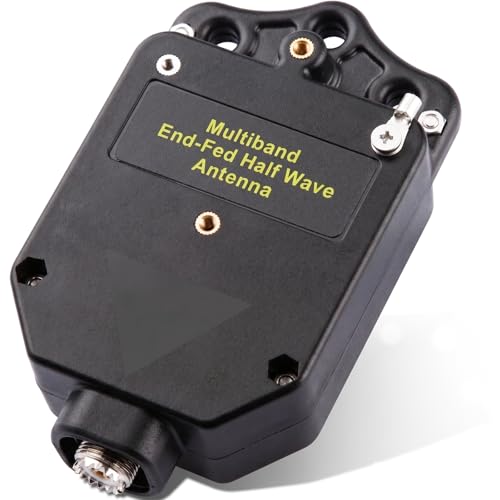
GOOZEEZOO 150 W end fed antenna transformer
A 49 to 1 transformer on its own, for building your own end fed from wire you cut to your own lot.
Check priceUnder $50
XRDS-RF
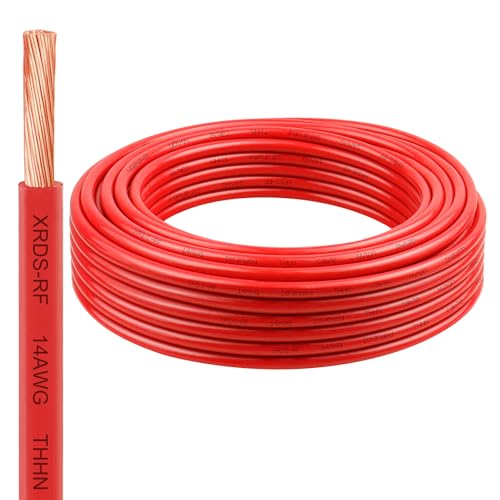
XRDS-RF 14 AWG stranded copper wire, 25 ft
Stranded insulated wire that survives weather and handles being pulled into a tree. The wire itself is the cheapest part of the antenna.
Check priceUnder $25

Quality Nylon Rope
QNR 3/16 in polyester antenna rope, 500 ft
UV-stable low-stretch rope. Hardware store polypropylene fails within a season and drops the antenna in the garden.
Check priceUnder $50

Redman
Nylon dog bone antenna insulators, 10-pack
End insulators so the high-voltage wire ends terminate into rope rather than into a branch or a fence.
Check priceUnder $50

Fair-Rite type 31
FT-240-31 ferrite toroid core
A type 31 ferrite core for winding a common mode choke at the feedpoint, which is the difference between a quiet station and RF on the microphone.
Check priceUnder $25
The complete station around this antenna, priced with a running total, is the first HF station build.
Common questions
Questions people ask about this
Do I need a tuner with an end fed half wave?
Usually not on the design bands, and often yes at the band edges. A well built 49 to 1 end fed presents something close to 50 ohms at the centre of 40, 20, 15 and 10 metres, which most radios accept without complaint. Toward the edges of 40 and 80 the match degrades, and a small automatic tuner keeps the radio happy across the whole band for under $200.
Is a dipole better than an end fed half wave?
On a single band, at the same height, a centre fed dipole is slightly better and considerably better understood. It is also harder to install because it needs two supports and the feedline has to reach the centre. In practice an end fed at 35 ft outperforms a dipole at 15 ft, and the end fed is the one that actually goes up, which is the comparison that matters.
How high does my antenna need to be?
Higher is better with no practical ceiling for amateur installations. A useful target is a quarter wavelength on your lowest band, which is 33 ft on 40 metres, and half a wavelength if you can get it. Below about 20 ft a horizontal wire radiates mostly upward, which works well for regional contacts and poorly for distance. Height is the cheapest performance you can buy.
Can I put an HF antenna in my attic?
Yes, and it works less well than the same antenna outside, typically by one to two S units depending on the roof material. A metal roof or foil-backed insulation makes it close to useless. The bigger issue is RF exposure, because an attic antenna sits a couple of metres from occupied rooms. Evaluate it properly using the [RF exposure calculator](/calculators/rf-exposure/) before you transmit.
Should my first antenna cover 80 metres?
Only if you have the space, because a full size 80 metre half wave is 125 ft of wire. Eighty is a night-time regional band with a lot of noise in summer, and most new operators find their contacts on 40 and 20. Start with a 40 metre based antenna, and add 80 later with a linked design or a separate wire if the local nets you want are there.
Keep going
Related on this site
- Full wave loop calculator The quiet alternative to a dipole if you have the space for a loop.
- Dipole versus end fed half wave The head to head, with the tradeoffs stated plainly.
- Vertical versus dipole Takeoff angle, noise and what your lot can support.
- Putting up a wire antenna The practical installation, rope to feedpoint.
- Dipole length calculator Cut length for any frequency and wire type.
Disclaimer Researched guidance for planning purposes, not professional engineering, electrical or legal advice. Antenna work, RF exposure, mast and tower work, grounding and battery handling all carry real risk that depends on your specific site and installation. Verify anything safety-critical against current FCC rules, the National Electrical Code and the manufacturer's own documentation, and hire a professional where the job calls for one. We research equipment from published specifications, regulatory documents and verified owner reviews rather than claiming hands-on testing we have not done.