Antenna Wire Gauge Chart: Best AWG by Use
The short answer · Updated 2026
Use 14 AWG stranded insulated copper for a permanent home dipole or end fed: 1.63 mm thick, about 12 lb per 1,000 ft, strong and cheap. Use copper clad steel for spans over about 100 ft on 80 or 160 metres, 18 to 22 AWG for portable antennas, and 24 to 26 AWG dark wire for a hidden antenna. At HF the electrical difference between these gauges is a fraction of a decibel.
At HF the gauge barely matters electrically. Mechanically it decides whether the antenna survives the winter.
Gauge at a glance
Copper antenna wire by gauge
| Gauge | Diameter | Weight per 1,000 ft | DC resistance per 1,000 ft | Typical antenna use |
|---|---|---|---|---|
| 12 AWG | 2.05 mm | 19.8 lb | 1.59 ohm | Long permanent spans |
| 14 AWG | 1.63 mm | 12.4 lb | 2.53 ohm | Home dipoles and end feds |
| 16 AWG | 1.29 mm | 7.8 lb | 4.02 ohm | Lighter permanent wires |
| 18 AWG | 1.02 mm | 4.9 lb | 6.39 ohm | Portable antennas |
| 22 AWG | 0.64 mm | 1.9 lb | 16.1 ohm | Backpack and SOTA wires |
| 26 AWG | 0.40 mm | 0.8 lb | 40.8 ohm | Stealth, low power only |
Bare solid copper figures at 20 C. Stranded and insulated wire of the same gauge weighs a little more. RF resistance is higher than DC because of skin effect, and it is still a fraction of a decibel on a half wave HF antenna at any of these gauges.
- Home default
- 14 AWG stranded
- Long spans
- Copper clad steel
- Portable
- 18 to 26 AWG
- Stealth
- 24 to 26 AWG dark
- Insulated versus bare
- 2 to 4 percent shorter
- Avoid
- Solid bare copper for spans
Antenna wire selection is almost entirely a mechanical decision. At HF the current in a wire antenna is low enough that conductor losses are negligible across any sane gauge, so the electrical difference between 14 AWG and 22 AWG is a fraction of a decibel that nobody will ever hear.
What changes is whether the wire survives being hauled into a tree, whether it stretches over a season, whether it snaps at a stress point, and whether the neighbours can see it.
Wire types compared
Wire types
Antenna wire by application
| Wire | Best for | Strength | Notes |
|---|---|---|---|
| 14 AWG stranded THHN | Permanent home antennas | Good | Tough, insulated, cheap, easy to handle |
| 12 AWG stranded | Long permanent spans | Very good | Heavier, more sag, more visible |
| 16 to 18 AWG stranded | Portable and temporary | Fair | Light, adequate for short spans |
| Copper clad steel, 14 to 18 | 80 and 160 m long spans | Excellent | High tensile, stiffer, harder to work |
| Silky or Kevlar cored | Backpack antennas | Excellent for weight | Very light, very strong, expensive |
| 24 to 26 AWG dark insulated | Stealth installations | Low | Invisible above about 25 ft, fragile |
| Solid bare copper | Short elements and radials | Poor in spans | Work hardens and snaps at flex points |
| Aluminium electric fence wire | Radial fields | Fair | Very cheap for large radial counts |
Stranded wire flexes without work hardening, which is why it outlasts solid wire in any span that moves. Solid wire is fine for a short element clamped at both ends and poor for anything hanging in a tree.
Span length and sag
A wire hung between two supports forms a catenary. Longer spans need either more tension or more sag, and more tension is the wrong answer because it transfers wind and tree movement straight into the feedpoint.
- Deliberate sag is good. A visible curve absorbs several feet of tree movement and costs essentially nothing in performance.
- Use a counterweight rather than a fixed tie-off at one end, so the tree can move without loading the wire.
- For spans over about 100 ft, copper clad steel is worth the extra handling difficulty. A full size 160 metre dipole is 246 ft of wire and plain copper will stretch.
- Support the coax at the feedpoint with rope so its weight does not hang on the connector.
- Inspect the span every season. Rope creeps, branches move, and a wire that cleared the driveway last year may not now.
Insulated or bare
- Insulated wire
- Safer where anything might touch it, more durable in weather, and easier to handle without gloves. It resonates 2 to 4 percent lower than bare wire of the same length, so cut long and trim. This is the default for a home installation.
- Bare wire
- Slightly cheaper, marginally shorter for a given resonance, and it makes soldering a tap or a joint easier. It also corrodes, and it is a genuine hazard where it can be reached. Reasonable for radials buried in a lawn and questionable for a span at head height.
- Enamelled or magnet wire
- Very light and used in some portable antennas. The coating is a poor insulator against contact and abrades easily, so treat it as bare wire for safety purposes.
Radial wire
A radial field is the one place where wire cost matters, because you need a lot of it. Sixteen quarter wave radials on 40 metres is over 500 ft of wire.
- Ground radials do not need to be resonant and do not need to be insulated. Number matters far more than length.
- Cheap wire is the right answer here. Aluminium electric fence wire and bulk stranded copper are both used successfully.
- Lay them on the surface and let the grass grow over them, or slit the turf with a spade. They do not need burying deeply.
- Elevated radials are a different matter: four of them, cut accurately to a quarter wave, perform as well as thirty on the ground. Those want good wire and careful lengths.
- Plan the field with the radial planning calculator.
Stealth wire
What to buy
Wire, rope and end hardware
The wire is the cheapest part of an antenna. The rope and the insulators decide its life.
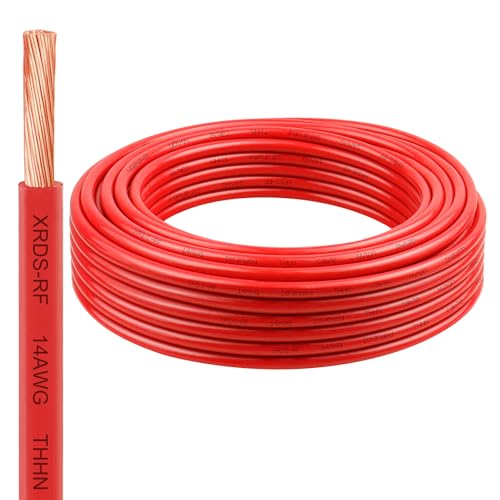
XRDS-RF
XRDS-RF 14 AWG stranded copper wire, 25 ft
The default: 14 AWG stranded insulated wire, tough enough for a permanent installation and easy to work with.
Check priceUnder $25

Paladin
Paladin 14 AWG stranded copper wire, 500 ft
A larger spool for multiple antennas or a radial field, where the per-foot price starts to matter.
Check priceUnder $100

Quality Nylon Rope
QNR 3/16 in polyester antenna rope, 500 ft
UV-stable low-stretch support rope. The rope should take every bit of the mechanical load, not the wire.
Check priceUnder $50

Redman
Nylon dog bone antenna insulators, 10-pack
End insulators so the wire terminates into rope with the high-voltage tip out of reach.
Check priceUnder $50
EZ Hang
EZ Hang antenna launcher
Additional antenna hardware for centre and end terminations on a home built wire.
Sold by EZ Hang, not Amazon. The link searches the category.

Forester
Forester arborist throw line kit
Getting the support line into a tree, which no amount of wire quality substitutes for.
Check priceUnder $25

Bonison
UV-resistant heavy duty zip ties, 100-pack
UV-rated ties for dressing a feedline. Ordinary ties fail within a year outdoors.
Check priceUnder $25
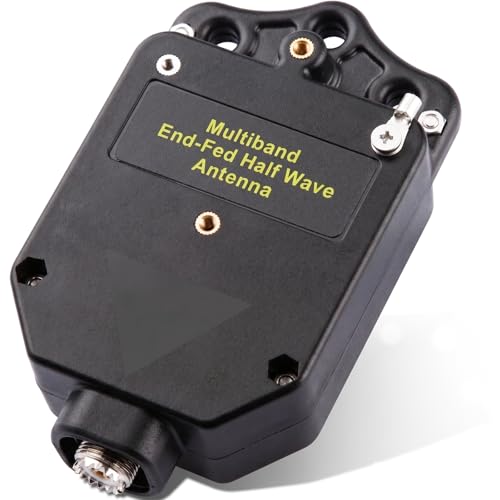
GOOZEEZOO
GOOZEEZOO 150 W end fed antenna transformer
A 49 to 1 transformer if you are building an end fed from your own wire.
Check priceUnder $50
Common questions
Questions people ask about this
What gauge wire should I use for a dipole?
Fourteen AWG stranded insulated wire for a permanent home installation. It is strong enough to survive being hauled into a tree, cheap, easy to handle and durable in weather. At HF the electrical difference between gauges is a fraction of a decibel, so the decision is mechanical. Thinner wire is for portable antennas and stealth installations where weight or visibility matters more.
Does insulated wire perform as well as bare wire?
Yes. Insulation slows the wave slightly so an insulated antenna needs to be about two to four percent shorter for the same resonant frequency, and that is the entire difference. Insulated wire is safer where anything might touch it, more durable outdoors and easier to handle. Cut long, measure the resonance at final height, and trim.
What wire should I use for radials?
The cheapest wire that will survive being laid on the ground, because you need a great deal of it. Ground radials do not need to be insulated or resonant, and the number of them matters far more than their length or quality. Elevated radials are different: four of them cut accurately to a quarter wave, which deserves good wire and careful measurement.
Why did my antenna wire break?
Usually at a stress point where the wire itself was taking mechanical load instead of the rope. Solid wire work hardens and snaps at any point that flexes repeatedly, which is why stranded wire outlasts it in a span. The fix is to terminate into an insulator with rope carrying all the tension, and to leave deliberate sag so the tree can move.
Is 12 gauge or 14 gauge better for a dipole?
Either works, and 14 AWG is the usual choice. Twelve gauge is about 60 percent heavier (19.8 against 12.4 lb per 1,000 ft of bare copper), so it sags more and loads the supports harder, while the electrical gain at HF is too small to measure on the air. Pick 12 AWG only for a long permanent span where abrasion and ice are real concerns.
Can I use very thin wire for a hidden antenna?
Yes, and it is the best performing stealth option because it is a full size antenna rather than a shortened one. Twenty four to twenty six gauge dark insulated wire is genuinely invisible from the ground above about 25 ft. It is fragile, so the support rope must carry all the mechanical load, and it will not survive an ice load in a cold climate.
Keep going
Related on this site
Sources
- Wire diameter, weight and DC resistance: standard annealed copper wire tables (ASTM B258 gauge dimensions; NIST Copper Wire Tables, Handbook 100).
- Conductor loss and antenna wire practice: The ARRL Antenna Book, chapters on HF wire antennas and ground systems.
- Insulated wire velocity factor (2 to 4 percent shorter): ARRL Antenna Book and manufacturer notes for THHN insulated wire.
Disclaimer Researched guidance for planning purposes, not professional engineering, electrical or legal advice. Antenna work, RF exposure, mast and tower work, grounding and battery handling all carry real risk that depends on your specific site and installation. Verify anything safety-critical against current FCC rules, the National Electrical Code and the manufacturer's own documentation, and hire a professional where the job calls for one. We research equipment from published specifications, regulatory documents and verified owner reviews rather than claiming hands-on testing we have not done.