Apartment and HOA antennas that actually work
A compromised antenna that exists beats a perfect antenna you are not allowed to build.
The short answer
The best apartment antenna is usually a loaded vertical clamped to a balcony rail with a counterpoise wire run along the floor, or a magnetic loop indoors when nothing can go outside. Both work at reduced power, both need a careful RF exposure evaluation because people are close, and both make worldwide contacts on a good day.
- Best balcony option
- Loaded vertical
- Best indoor option
- Magnetic loop
- Realistic power
- 10 to 50 W
- Typical penalty
- 1 to 2 S units
- Counterpoise
- Essential, not optional
- Exposure risk
- High, evaluate first
A large proportion of licensed amateurs live somewhere they cannot put up an antenna, and a large proportion of those never get on HF because every guide assumes a garden with trees. That is a shame, because the compromise antennas genuinely work. Not as well as a wire at 40 ft, and well enough to work a hundred countries from a third floor balcony.
What changes is that every decision is dominated by two constraints instead of one. The antenna has to be small or invisible, and it has to be safe with people a few feet away. The second constraint is the one people skip and the one that matters most.
The balcony vertical
A short loaded vertical clamped to a rail is the most productive apartment antenna, because it puts the radiating element in the clear and outside the building structure.
- A Gabil GRA-7350T telescopic HF whip or a Super Antenna MC80 80 m SuperCoil clamps or stands on a small footprint and covers a wide band range by moving a tap or adjusting a coil.
- The counterpoise is not optional. A short vertical without a ground system radiates into the building wiring, which is both inefficient and the fastest route to interference complaints. Run one or more counterpoise wires along the balcony floor, roughly a quarter wave on the lowest band you use, folded back on themselves if space is short.
- The metal balcony rail can serve as part of the counterpoise if it is a continuous run. Bond to it properly rather than relying on a clamp through paint.
- Fit a common mode choke at the feedpoint. Without it, your coax becomes the counterpoise and RF arrives in the flat.
- Take it down when not in use if visibility is a concern. A vertical that mounts in ten seconds gets used; one that takes an hour does not.
The magnetic loop
A small transmitting loop is a metre or so of large diameter tubing formed into a circle, tuned by a high voltage variable capacitor. It is the only antenna that works genuinely well indoors, and it has two large drawbacks.
- What it does well
- Very high efficiency for its size on the bands it is designed for, a deep null perpendicular to the loop plane that can be rotated to reject a local noise source, and it works close to the floor and inside a room. It is also directional enough to be useful.
- Extremely narrow bandwidth
- A few kilohertz on the low bands. Every frequency change means retuning the capacitor, which is why remote tuned loops with a motor exist and why they cost what they do.
- Dangerous voltages at the capacitor
- A loop running 100 W develops several kilovolts across the tuning capacitor. This is not a hazard to be casual about in a room where people are, and it is a strong argument for running low power on one.
- Cost
- A commercial loop is expensive relative to its performance. Home built loops are a well documented project and considerably cheaper, and the capacitor is the part that determines whether it works.
The attic wire
If you have access to a loft, a dipole or end fed up there is invisible, permanent and requires no permission from anybody.
- Run the wire as long and as straight as the space allows. Zigzagging around trusses works and costs some efficiency.
- Keep the wire away from electrical cable, plumbing and anything metal. A wire running parallel to a mains cable for ten feet is an interference generator.
- Expect one to two S units of loss compared with the same antenna outside. Under a metal roof or foil-backed insulation, expect it to barely work at all.
- Fit an end insulator and keep the high-voltage ends away from anything anyone might touch, including a loft hatch.
- Run the exposure numbers for the room below. This is the one antenna case where a person is genuinely close for hours at a time, which removes the benefit of the averaging window.
- Use XRDS-RF 14 AWG stranded copper wire, 25 ft insulated wire. Bare wire in a loft touching a truss nail is a fault waiting to happen.
Getting the feedline out of the flat
This defeats more apartment stations than the antenna does. You need coax to cross a window or wall without drilling and without leaving a window open.
- A flat window pass-through cable is the standard answer, a short length of ribbon-shaped coax that passes under a closed sash.
- A ventilation grille, a letterbox or an existing cable entry may already give you a route.
- Keep the run short. A 25 ft length of JEFA Tech 240-series flex coax, 50 ft with PL-259 class cable is light, flexible and low enough loss for HF.
- Fit a bulkhead connector such as an Max-Gain Systems bulkhead SO-239 feedthrough at the crossing point so the cable can be disconnected in seconds, which matters for both storms and discretion.
- Choke the line on both sides of the crossing. An apartment feedline runs close to everything electrical in the building.
Managing noise, which is the real limitation
The performance ceiling in an apartment is usually not your transmitted signal but what you can hear. A modern building is full of switching power supplies, LED drivers, solar inverters and network equipment, and the noise floor can be twenty decibels above a rural site.
- A loop antenna with a rotatable null can put that null on the worst offender, which is often worth more than any amount of gain.
- Find and fix the noise sources in your own flat first. Half of what you hear is usually yours. See radio noise and RFI hunting.
- A separate receive antenna, even a short wire on the far side of the flat, sometimes hears better than the transmit antenna.
- Ferrite chokes on every mains lead and network cable in the shack are cheap and often produce a dramatic improvement.
- A Nooelec NESDR Smart RTL-SDR bundle is a useful noise-hunting tool as well as a receiver, because it shows you the whole spectrum at once.
What to buy
A working apartment station
Small antennas, a choke, a way through the window, and a radio that does not need 100 W to be useful.
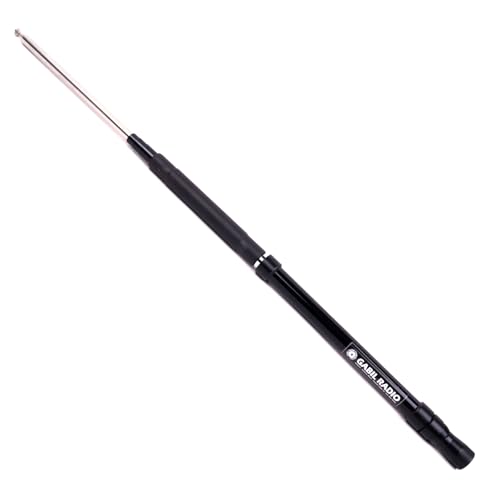
Gabil
Gabil GRA-7350T telescopic HF whip
A compact loaded vertical with a tripod or clamp mount. Covers many bands and deploys on a balcony in minutes.
Check priceUnder $250

Super Antenna
Super Antenna MC80 80 m SuperCoil
A tunable whip system built for exactly this constraint, with a counterpoise kit included in the thinking.
Check priceUnder $100
Wolf River Coils
Wolf River Coils Take It Along vertical
A coil-loaded vertical that goes up for a session and comes down after, which sidesteps permanent installation rules.
Sold by Wolf River Coils, not Amazon. The link searches the category.
Balun Designs
Balun Designs 1171 1:1 current balun
A proper common mode choke, which matters more in an apartment than anywhere else because the feedline runs past everything.
Sold by Balun Designs, not Amazon. The link searches the category.

Max-Gain Systems
Max-Gain Systems bulkhead SO-239 feedthrough
A bulkhead connector at the window crossing so the feedline disconnects in seconds.
Check priceUnder $50

Xiegu
Xiegu G90
A 20 W radio with a built-in tuner, which suits a compromise antenna and a reduced power exposure evaluation.
Check priceUnder $500
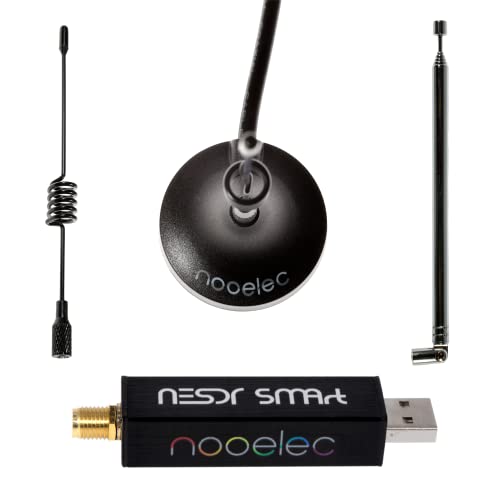
Nooelec
Nooelec NESDR Smart RTL-SDR bundle
A cheap wideband receiver for hunting the noise sources that limit an apartment station.
Check priceUnder $100

JEFA Tech
JEFA Tech 240-series flex coax, 50 ft with PL-259
Light, flexible, low-loss enough coax for a short indoor run that has to bend around a window.
Check priceUnder $50
Common questions
Questions people ask about this
Can I really work the world from an apartment balcony?
Yes, with patience and realistic expectations. A loaded vertical with a proper counterpoise on a balcony, running 20 to 50 W, regularly produces contacts across oceans when the band is open. You will lose one to two S units against a full size antenna at height, which costs you the marginal contacts and not the good ones. Digital modes narrow the gap further because they decode below the noise.
Do I need a counterpoise on a balcony vertical?
Absolutely, and it is the step most often skipped. A short vertical without a ground system uses whatever conductor it can find, which in a flat means the building wiring and your coax braid. That is inefficient, it puts RF where you live, and it is the fastest route to an interference complaint. Run counterpoise wire along the balcony floor, roughly a quarter wave on your lowest band.
Is a magnetic loop worth the money?
It is the only antenna that works genuinely well indoors, and its rotatable null against a local noise source is worth more in a noisy building than gain would be. Against that, the bandwidth is only a few kilohertz on the low bands so every frequency change means retuning, and the voltages across the tuning capacitor are lethal at power. Worth it if indoors is your only option.
How do I get coax out of a window without drilling?
A flat window pass-through cable is made for this: a short ribbon-shaped section of coax that passes under a closed sash without damaging the seal. Beyond that, look for an existing route such as a ventilation grille or a cable entry the building already has. Fit a bulkhead connector at the crossing so the run disconnects quickly for storms and for discretion.
What power can I safely run in a flat?
That is exactly what the RF exposure evaluation answers, and the answer is genuinely lower than in a house. With an antenna on a balcony rail a few feet from a chair, a bed and possibly the neighbouring flat, the distance term dominates and many apartment stations end up between 10 and 50 W. Run the numbers for your own geometry rather than adopting anybody else conclusion.
Keep going
Related on this site
- J-pole length calculator Build the window antenna to length.
- Handheld whip vs roll-up J-pole A roll-up J-pole in a window is the apartment VHF antenna.
- HOA and antenna restrictions What the rules actually say, and how to negotiate.
- RF exposure evaluation The step this situation cannot skip.
- Radio noise and RFI hunting The real limit on an apartment station.
- RF exposure calculator Run it before the first transmission.
Disclaimer Researched guidance for planning purposes, not professional engineering, electrical or legal advice. Antenna work, RF exposure, mast and tower work, grounding and battery handling all carry real risk that depends on your specific site and installation. Verify anything safety-critical against current FCC rules, the National Electrical Code and the manufacturer's own documentation, and hire a professional where the job calls for one. We research equipment from published specifications, regulatory documents and verified owner reviews rather than claiming hands-on testing we have not done.