HOA and antenna restrictions: what the rules actually say
Federal preemption protects you from your city. It mostly does not protect you from your deed.
The short answer
The FCC PRB-1 policy requires local governments to reasonably accommodate amateur antennas, and many states have written it into law. Private deed restrictions and homeowner association covenants are a separate matter and are generally enforceable, because PRB-1 addresses state and local government regulation rather than private contracts.
- PRB-1 covers
- Local government
- PRB-1 does not cover
- Private CC&Rs
- OTARD covers
- TV and broadband, not amateur
- State laws
- Most states have one
- Best first move
- Read the covenant
- Best practical answer
- Something invisible
Antenna restrictions produce more misinformation than any other topic in this hobby, and most of it comes from conflating two entirely different legal situations. One is regulation by a city or county, where amateur radio has genuine federal protection. The other is a private contract you signed when you bought the house, where it largely does not.
Getting the distinction right matters, because the strategies are different. Against a zoning ordinance you have a strong argument and a policy behind it. Against a covenant you have negotiation, discretion and clever engineering.
This page explains what each rule covers, and what people actually do about it.
PRB-1 and what it does
In 1985 the FCC issued a policy statement, commonly called PRB-1, holding that local regulation of amateur antennas is preempted where it fails to reasonably accommodate amateur communications, and that any regulation must represent the minimum practicable restriction to accomplish the local authority legitimate purpose. The current amateur service rules at Part 97.15 carry the antenna structure provisions.
- It applies to states, counties, cities and towns. It is about government regulation.
- It requires reasonable accommodation, not unlimited height. A city can have a height ordinance; it cannot have one that leaves amateur communication impossible.
- Most states have adopted their own statute codifying it, and several go further than the federal policy.
- It has been litigated many times, and the pattern is that a local authority which refuses to consider any accommodation loses, while one that grants a conditional permit with genuine conditions generally does not.
- It does not preempt building codes, safety requirements or setback rules applied evenhandedly.
Deed restrictions and covenants
A covenant, condition and restriction attached to a deed is a private contract between the property owner and the association. Federal preemption of government regulation does not reach it, and the courts have consistently treated amateur antenna covenants as enforceable private agreements.
- Read the actual document, not a summary. Restrictions vary enormously. Many prohibit "antennas visible from the street" rather than antennas as such, which is a very different constraint from a flat ban.
- Check what is already there. Satellite dishes, flagpoles, weather vanes and TV aerials on other houses tell you what the association tolerates in practice.
- Find the approval process. Most associations have an architectural review committee, and many have never received an amateur radio request. A specific, modest, well presented application is often granted.
- Ask for what you actually need. A request for a 60 ft tower gets refused. A request for a flagpole vertical or a wire that is invisible from the street is a different conversation.
- Get the answer in writing. Approval from a committee that later changes membership is worth having on paper.
What people actually install
The practical outcome in a restricted neighbourhood is almost always an antenna nobody notices, and the good news is that a surprising amount of performance is available from one.
Stealth options
Restricted-lot antennas by visibility and performance
| Antenna | Visibility | Performance | Notes |
|---|---|---|---|
| Thin wire in trees | Very low | Good | Dark 22 to 26 AWG wire disappears at 30 ft |
| Flagpole vertical | Looks like a flagpole | Good with radials | Fly a flag on it, that is the point |
| Attic dipole | Invisible | Fair | One to two S units down, exposure needs care |
| Loaded whip on a rail | Low | Fair | Balcony and patio installations |
| Magnetic loop | Low, small | Fair, very narrow band | Works indoors, needs retuning constantly |
| Gutter or fence as a radiator | Invisible | Poor to fair | Unpredictable, and noisy on receive |
| Temporary mast for a session | Up and down same day | Good | Often outside the letter of a permanent structure rule |
The apartment and HOA antennas guide covers the practical installation of each of these in detail.
Negotiating well
How the successful requests are made
- 1
Lead with what the neighbours will see
Not with your rights. An association board cares about property values and appearance. A photograph of a comparable installation answers their actual question in one image.
- 2
Bring a specific proposal
A named product, a stated height, a stated colour and a stated location. Vague requests get refused because they cannot be bounded.
- 3
Offer conditions yourself
Lowering a mast when not in use, a maximum height, removal on sale of the property. Offering a limit is more persuasive than having one imposed.
- 4
Mention emergency communications honestly
It is a real public benefit and worth one sentence. It is not a legal argument and overplaying it reads as a tactic.
- 5
Address interference before they raise it
They will worry about television and audio equipment. Say plainly that you will resolve any interference reported to you, and mean it. See radio noise and RFI hunting.
- 6
Do not install first and ask later
An association that discovers an antenna is an association that has to be seen to act. The same request in advance often succeeds.
Buying a house as an amateur
- Read the covenants before you make an offer. They are public record and an agent can obtain them.
- A property with no association is worth real money to an amateur, and it is the single easiest way to solve this problem permanently.
- Check the zoning height limit and any historic district overlay separately from the covenant.
- Look up, on the site, at the time of viewing. Overhead distribution lines constrain where an antenna can ever go regardless of what any rule says.
- Trees are an asset. A lot with two mature trees 70 ft apart is an antenna farm that needs no permission at all.
Gear for a restricted lot
What works when nothing can be visible
Small, low, temporary or disguised. All of these make real contacts.
Wolf River Coils
Wolf River Coils Take It Along vertical
A coil-loaded vertical on a spike that goes up for a session and comes down afterwards, which sidesteps most permanent structure rules.
Sold by Wolf River Coils, not Amazon. The link searches the category.
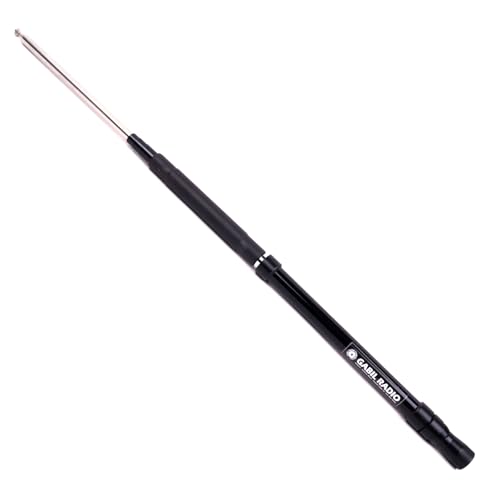
Gabil
Gabil GRA-7350T telescopic HF whip
A portable loaded vertical with a tripod, small enough for a patio and quick to deploy and stow.
Check priceUnder $250

Super Antenna
Super Antenna MC80 80 m SuperCoil
A compact tunable whip system designed for restricted and portable operation across many bands.
Check priceUnder $100

JYR
JYR8010 8-band end fed half wave, 150 W
Hang thin dark wire in a tree line and it disappears at any real height. The highest performance stealth option.
Check priceUnder $100
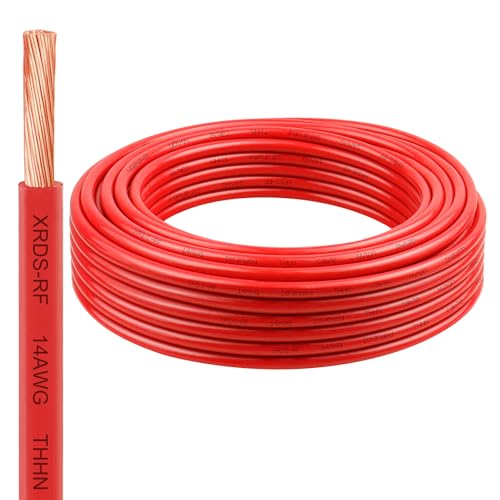
XRDS-RF
XRDS-RF 14 AWG stranded copper wire, 25 ft
Or build your own from thin dark wire, which is the classic invisible antenna.
Check priceUnder $25

Easy Up
Easy Up 20 ft telescoping push-up mast
A mast that goes up for an afternoon and comes down again is a different thing from a permanent installation, both practically and often legally.
Check priceUnder $250
Common questions
Questions people ask about this
Does PRB-1 override my homeowner association?
No. PRB-1 addresses regulation by state and local government, requiring reasonable accommodation of amateur antennas in zoning and ordinances. A covenant attached to your deed is a private contract, and federal preemption of government regulation does not reach it. Legislation to extend protection to private covenants has been introduced repeatedly and has not become law.
Can my HOA stop me putting a wire in a tree?
It depends entirely on the wording of your covenant. Many restrict antennas that are visible from the street rather than antennas outright, and thin dark wire at 30 ft in a tree line is genuinely not visible. Read the document rather than relying on what a neighbour says it means, and if the wording is ambiguous, an approved request in writing is worth more than a technically defensible interpretation.
What about the OTARD rule?
OTARD limits restrictions on antennas used to receive video programming and fixed wireless broadband service. It does not cover amateur transmitting antennas, despite being cited in amateur discussions constantly. Raising it with an association is an argument that will be checked and will fail, which damages the credibility of the requests that would have worked.
Should I ask permission or just put it up?
Ask, in almost every case. An association that discovers an antenna has to be seen to act on it, and a removal demand is much harder to negotiate away than an initial approval. A specific, modest, well presented request with a photograph and offered conditions succeeds more often than people expect, because most boards have never received one.
Is an attic antenna a good compromise?
It works, at a cost of roughly one to two S units compared with the same antenna outside, and far worse under a metal roof or foil-backed insulation. The real consideration is RF exposure, because an attic antenna sits a couple of metres from occupied rooms with only a floor in between. Evaluate it at your actual power and duty cycle before transmitting, and expect to run reduced power.
Keep going
Related on this site
Disclaimer Researched guidance for planning purposes, not professional engineering, electrical or legal advice. Antenna work, RF exposure, mast and tower work, grounding and battery handling all carry real risk that depends on your specific site and installation. Verify anything safety-critical against current FCC rules, the National Electrical Code and the manufacturer's own documentation, and hire a professional where the job calls for one. We research equipment from published specifications, regulatory documents and verified owner reviews rather than claiming hands-on testing we have not done.