Vertical versus dipole for HF
A vertical radiates low and hears everything. A dipole radiates high and hears less noise.
The short answer
A quarter wave vertical has a low takeoff angle that favours distant contacts and needs an extensive radial system to be efficient. A horizontal dipole at half a wavelength or more has a lower noise floor and works better for regional contacts. If your lot has trees, start with the dipole or end fed. If it has open lawn and no height, start with the vertical.
- Vertical takeoff
- 15 to 25 degrees
- Low dipole takeoff
- 60 to 90 degrees
- High dipole takeoff
- 25 to 35 degrees
- Ground radials needed
- 16 to 32
- Elevated radials
- 4 tuned
- Noise
- Vertical hears more
This is the oldest argument in HF antennas and it has a clear answer that people dislike because it depends on your garden. What decides it is not which antenna is better in theory but which one your lot can support properly, and both have a failure mode that ruins them.
A dipole hung too low radiates upward and works only regionally. A vertical with too few radials converts your transmitter output into warm soil. Neither failure is visible on an SWR meter, which is why both antennas have devoted advocates and equally devoted critics.
Takeoff angle, which is the whole argument
The angle at which an antenna sends most of its energy above the horizon determines how far a single hop travels. A low angle produces a long first hop and favours distant contacts. A high angle sends energy nearly straight up, which comes back down close by and is excellent for regional work under about 400 miles.
Takeoff angle
Radiation angle and what it reaches
| Antenna | Main takeoff angle | First hop distance | Best for |
|---|---|---|---|
| Ground mounted vertical | 15 to 25 degrees | 1,200 to 2,500 miles | Distance |
| Elevated vertical, 4 radials | 15 to 20 degrees | 1,500 to 2,500 miles | Distance |
| Dipole at 0.5 wavelength | 25 to 35 degrees | 800 to 1,500 miles | Both |
| Dipole at 0.25 wavelength | 50 to 70 degrees | 200 to 600 miles | Regional |
| Dipole at 0.1 wavelength | 80 to 90 degrees | Under 300 miles | Local nets only |
On 40 metres, half a wavelength is 66 ft and a quarter is 33 ft. Most suburban dipoles live below both figures, which is why a low 40 metre dipole is a superb regional antenna and a poor distance antenna. Run your own case on the antenna height calculator.
The vertical ground system
A quarter wave vertical is half a dipole, and the missing half is supplied by the ground system. Current returning through soil encounters resistance, and that resistance turns your transmitter output into heat. This is the single largest variable in vertical antenna performance and it is invisible to an SWR meter, because loss resistance looks exactly like a good match.
- Four ground radials is poor. Losses of several decibels are typical, which is most of your signal.
- Sixteen radials is good and is where most amateur installations settle.
- Thirty two radials is close to the practical ceiling for the effort involved.
- Ground radials do not need to be resonant. Length matters less than number, and they can be laid on the surface or just under the turf.
- Four elevated radials, cut to a quarter wave, perform as well as thirty on the ground. This is the single most useful fact about verticals, and it is why a vertical on a short mast with four tuned wires beats a ground mounted one with a modest radial field.
- Plan the field with the radial planning calculator.
A no-radial vertical such as the Comet CHA-250B broadband vertical or the Comet CHA-250HD broadband vertical sidesteps this with an internal matching network, at a real cost in efficiency. It is an honest tradeoff: worse than a proper vertical with radials, better than a vertical with four, and installable where neither is practical.
Noise, which people underestimate
A vertical is omnidirectional in azimuth and sensitive at low angles, which is precisely the direction most man-made noise arrives from. In a suburban location this frequently costs more than the takeoff angle gains.
- A horizontal antenna rejects a good deal of vertically polarised local noise simply by being the wrong orientation.
- A vertical placed close to a house picks up everything the house radiates. Distance from the building is worth as much as radials.
- On the low bands many operators transmit on a vertical and listen on a separate horizontal or loop antenna for exactly this reason.
- If a vertical seems disappointing, measure the noise floor difference rather than assuming the antenna is inefficient. See radio noise and RFI hunting.
Choosing by lot
Decision table
Which antenna your property actually supports
| Your lot | Pick | Why |
|---|---|---|
| Two tall trees, 70 ft apart | Dipole | Height is free and the ground system is irrelevant |
| One tall tree | End fed half wave | Same benefits, one support |
| Open lawn, no trees | Ground mounted vertical | Radials go under the grass |
| Small lot, some height | Elevated vertical, 4 radials | Best performance per square foot |
| Roof access only | Vertical on the roof | Roof height gives a low angle already |
| Coastal or waterside | Vertical, strongly | Salt water is an excellent ground and the gain is real |
| Noisy suburban location | Horizontal | The noise floor decides more than the takeoff angle |
Most active stations end up with both within a couple of years, and switch between them by band and by time of day. That is not indecision, it is the correct answer.
What to buy
Verticals and the wire alternatives
Prices researched at time of writing.
Comet
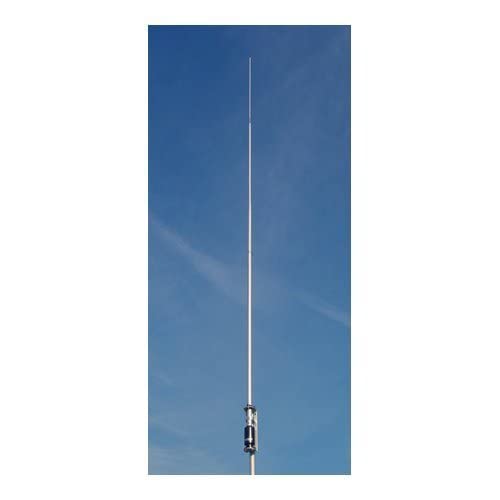
Comet CHA-250B broadband vertical
A no-radial multiband vertical for a suburban garden. Efficiency traded for an installation that fits.
Check priceUnder $500

Comet
Comet CHA-250HD broadband vertical
The heavier duty version of the same idea, for a station running more power.
Check priceUnder $500
Hustler
Hustler 4-BTV trap vertical
A trapped multiband vertical that expects a real radial field and rewards one. The classic performance answer.
Sold by Hustler, through amateur radio dealers, not Amazon. The link searches the category.
DX Commander
DX Commander Classic multiband vertical
A multiband vertical built from parallel wires on a fibreglass mast, widely regarded as one of the best value performers when radials are done properly.
Sold by DX Commander, not Amazon. The link searches the category.

JYR
JYR8010 8-band end fed half wave, 150 W
The wire alternative. If you have one tall support, this outperforms a compromised vertical for less money.
Check priceUnder $100

Alpha Delta
Alpha Delta DX-EE parallel dipole, 40 to 10 m
A shortened centre fed dipole for a lot with two supports but limited span.
Check priceUnder $250
XRDS-RF
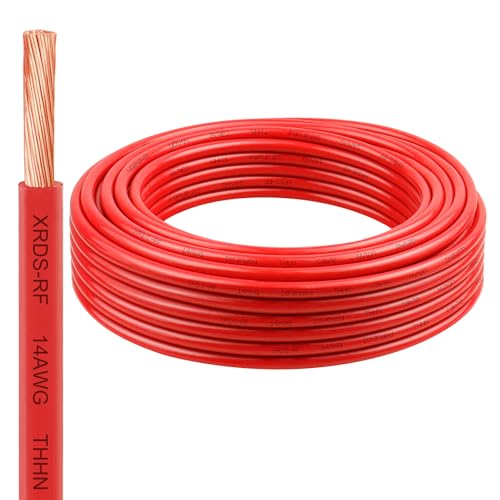
XRDS-RF 14 AWG stranded copper wire, 25 ft
Radial wire. The cheapest performance upgrade available to any vertical owner.
Check priceUnder $25

AURSINC
NanoVNA H4 vector network analyzer
Shows you whether adding radials is changing the feedpoint, which is how you know when to stop.
Check priceUnder $100
Common questions
Questions people ask about this
Is a vertical better for DX than a dipole?
At the same installation quality, yes, because a vertical has a low takeoff angle at any height while a horizontal dipole needs to be half a wavelength up to achieve one. The qualifier matters: a vertical with four ground radials loses several decibels in the soil, which cancels the advantage. A vertical with sixteen or more radials, or four elevated ones, genuinely does outperform a low dipole for distance.
How many radials does a vertical need?
Sixteen laid on the ground is a good practical target and thirty two is close to the ceiling of usefulness. Four is genuinely poor and costs several decibels. The important exception is elevated radials: four resonant quarter wave radials at height perform about as well as thirty on the ground, which makes an elevated vertical the best performance per unit of effort.
Why is my vertical so noisy?
Because it is omnidirectional and most sensitive at low angles, which is where man-made noise arrives from. A horizontal antenna rejects a large share of vertically polarised local noise simply by orientation. Move the vertical further from the house if you can, hunt the noise sources, and consider a separate receive antenna for the low bands.
Can I use a vertical without any radials?
Commercial no-radial verticals exist and work, using an internal matching network and often a long counterpoise inside the base. They are less efficient than a proper vertical with a radial field, and honest manufacturers say so. They earn their place where a radial field is impossible, such as a small garden or a roof, and they beat having no HF antenna at all.
Should I have both?
Most active HF stations end up with both within a couple of years and switch between them by band, time of day and direction. A vertical for distance on 20 and 40, a wire for regional work and for a lower noise floor on receive. Switching between two antennas is often a bigger improvement than upgrading either one.
Keep going
Related on this site
Disclaimer Researched guidance for planning purposes, not professional engineering, electrical or legal advice. Antenna work, RF exposure, mast and tower work, grounding and battery handling all carry real risk that depends on your specific site and installation. Verify anything safety-critical against current FCC rules, the National Electrical Code and the manufacturer's own documentation, and hire a professional where the job calls for one. We research equipment from published specifications, regulatory documents and verified owner reviews rather than claiming hands-on testing we have not done.