Your first ham radio station: what to buy in what order
License, antenna, radio, power, in that order. Reversing it is how people end up with a radio and nothing to plug it into.
The short answer
Buy in this order: study materials and the exam, then a handheld and a real antenna for it, then an outdoor antenna, then an HF radio and power supply once you hold a General license. A complete Technician station costs under $400 and a first HF station under $2,000, and in both cases the antenna deserves more of the budget than beginners give it.
- Technician station
- Under $400
- First HF station
- Under $2,000
- Full HF base
- Under $6,000
- Exam fee
- $15 typical
- First upgrade
- Antenna, always
- Biggest mistake
- Radio before antenna
The most expensive mistake in this hobby is buying things in the wrong order. It produces a radio with no antenna, an antenna with no way to raise it, a power supply that sags, and a growing suspicion that the hobby is disappointing. It is not disappointing. It is sequenced.
The correct sequence is unglamorous: the license first, because transmitting without one is illegal and the exam is easier than it looks. Then the smallest capable radio and a genuinely good antenna for it. Then height. Then, only when you actually hold a General, the HF station.
This page lays out the order, states what each stage costs, and links the complete priced build for each one.
Stage one: the license, about $50
The Technician exam is 35 multiple choice questions drawn from a published pool, with a passing mark of 26. Most people study ten to fifteen hours. The pool is public, the answers are public, and practice exams drawn from the same pool are free.
- A study manual such as the ARRL Ham Radio License Manual, Technician guide walks the pool in a sensible order and explains rather than drills.
- The exam fee at a volunteer examiner session is typically $15, plus a separate FCC application fee. See what the exam costs.
- You can take the General exam the same day at no extra charge if you pass Technician, which a surprising number of people do.
- Find a session near you with how to find an exam session, and know what to expect from exam day.
- Buy a radio before the exam if you like. Listening while you study is the best preparation there is.
Stage two: a handheld and a real antenna, under $100
The first radio should be cheap, because its job is to tell you which parts of the hobby you enjoy. What should not be cheap is the antenna on it.
The starting pair
A radio you will not mind outgrowing, and the antenna that makes it work.
Baofeng
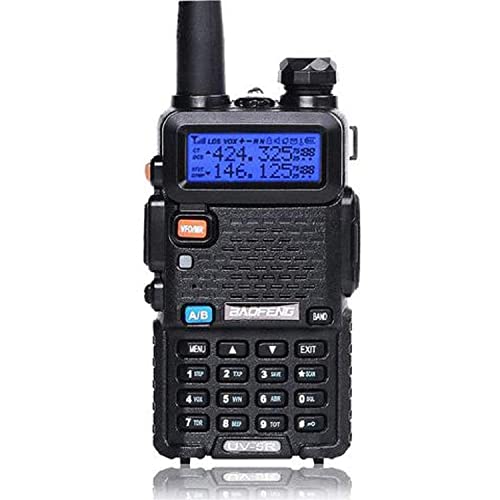
Baofeng UV-5R
The cheapest working dual-band handheld. Its purpose is to get you listening and talking without a spending decision attached.
Check priceUnder $25

Nagoya
Nagoya NA-771C 15-inch whip
A gain whip in place of the stock rubber duck. Roughly doubles usable range and costs less than lunch. Buy it at the same time as the radio.
Check priceUnder $25
BTECH
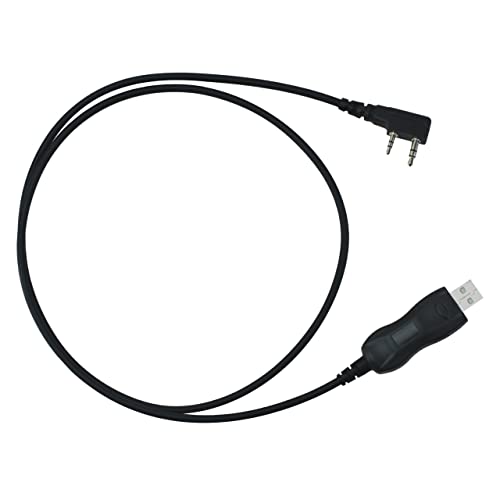
BTECH PC03 FTDI programming cable
A programming cable, because entering repeaters on the keypad is genuinely unpleasant. Ten minutes with CHIRP instead of an evening.
Check priceUnder $25

Yaesu
Yaesu FT-60R
The alternative first radio for anyone in an area with strong commercial transmitters, where the cheap radio receiver struggles.
Check priceUnder $250
Then program it, using how to program a Baofeng, and make a first contact using how to use a repeater.
Stage three: get an antenna outside, under $250
This is where a station stops being a toy. A handheld talking through an outdoor antenna at roof height is a different radio, and it is the point where most people decide the hobby is worth continuing.
- A dual-band vertical such as a Diamond X50A dual-band base antenna on a gable end mount is the standard answer and covers 2 m and 70 cm.
- The mount matters as much as the antenna. A Skywalker J-pipe antenna mount, 38 in reached from a ladder avoids walking on the roof entirely.
- Use decent coax. Loss at 146 MHz is real, and a run of Bolton400 low-loss coax, 100 ft with PL-259 preserves what a run of thin cable would waste. See the coax loss calculator.
- Weatherproof the outdoor connector with Self-amalgamating rubber splicing tape. Water in a connector is the most common failure in any station.
- Ground the feedline at a single entry point. See station grounding and lightning protection.
The complete version, with a running total, is the Technician starter station build at under $400.
Stage four: General class and HF, under $2,000
HF is what most people mean when they picture amateur radio: talking across the world from your own house, with no infrastructure between you and the other station. It needs the General license for meaningful voice access, and it needs a real antenna in the air.
The HF station
What a first HF station consists of and what each part costs
| Part | Typical choice | Researched cost |
|---|---|---|
| Transceiver | 100 W with a spectrum scope | $700 to $1,300 |
| Antenna | End fed half wave, 40 through 10 m | $70 to $180 |
| Support | Rope, throw line, insulators, mast if needed | $60 to $250 |
| Feedline | 100 ft of low-loss coax with connectors | $100 to $180 |
| Tuner | Automatic, for the band edges | $150 to $300 |
| Power supply | 30 A linear or switching | $110 to $250 |
| Grounding | Rod, bar, strap and arrester | $120 to $200 |
| Measurement | SWR meter and antenna analyser | $80 to $200 |
The first HF station build prices this exact list line by line and totals under $2,000, with everything linked.
The three mistakes that cost the most
- Spending the budget on the radio
- A $700 radio into a good antenna beats a $3,000 radio into a poor one, decisively and every time. The receiver in a modern entry level radio is genuinely excellent. What decides your station is what is in the air. If the antenna is under a third of your total spend, the balance is wrong.
- Ignoring the power supply until last
- A 100 W HF radio pulls over 20 A on transmit peaks. A supply that sags under that produces distorted audio, and one that is electrically noisy raises your own noise floor across the bands you are trying to hear. See sizing a power supply.
- Treating grounding as an accessory
- It is roughly five percent of a station budget and it protects the other ninety-five, plus the house and the people in it. It is also the one part covered by a building code.
What can wait
- An amplifier. Doubling power is one S unit. Getting the antenna higher is several. Amplifiers solve a real problem that you meet years in.
- A second radio. Almost nobody needs one in the first year, and the money is better spent on the antenna system.
- A tower. Wire antennas and a push-up mast cover the first several years of most stations.
- A rotator. It only means something once you own a directional antenna, which means a tower.
- Expensive headphones and microphones. Real improvements, and improvements to the last one percent.
Compare all four station builds side by side on the station builds hub, which states the total for each tier and who it is for.
Common questions
Questions people ask about this
What is the cheapest complete station that actually works?
Under $400 including the exam. That buys a dual-band handheld, a gain antenna for it, a programming cable, an outdoor vertical on a gable mount, coax, connectors and basic grounding. That station works local repeaters reliably, which is where nearly all new operators spend their first year. The [Technician starter station build](/setups/technician-starter-station/) lists every item with a price.
Should I buy a radio before I pass the exam?
Yes, and buy a cheap one. Listening to your local repeaters and to HF while you study makes the material concrete in a way no book manages, and receiving requires no licence at all. What you should not do is transmit, which is a violation of federal law with real fines attached and is also traceable in about four minutes.
How much of my budget should go on the antenna?
At least a third, and more is defensible. The antenna and its support decide what your station can do. A modest radio into a good antenna at height beats an expensive radio into a compromise, by a margin nobody argues about. Beginners consistently invert this because a radio is a product with reviews and an antenna is a wire in a tree.
Do I need HF, or is VHF and UHF enough?
Plenty of people are happily active on VHF and UHF for years. Repeaters, nets, digital voice, satellites and emergency communication all live there and need only a Technician licence. HF is a different activity: worldwide contacts with no infrastructure, which is what draws most people deeper. Start where your licence lets you and let your interest decide.
What order should I upgrade in?
Antenna height first, then feedline quality, then the antenna type, then the radio. That order holds for almost every station and almost every band. The only common exception is a first radio with a poor receiver in a high-interference area, where a better receiver genuinely changes what you can hear. Power is always last.
Keep going
Related on this site
- First radio after Technician Which radio a new Technician should buy, and what to wait on.
- All four station builds Compared side by side with totals.
- The Technician license What it grants and what the exam covers.
- Your first HF antenna The part that deserves the budget.
- Sizing a power supply The part everyone leaves until last.
Disclaimer Researched guidance for planning purposes, not professional engineering, electrical or legal advice. Antenna work, RF exposure, mast and tower work, grounding and battery handling all carry real risk that depends on your specific site and installation. Verify anything safety-critical against current FCC rules, the National Electrical Code and the manufacturer's own documentation, and hire a professional where the job calls for one. We research equipment from published specifications, regulatory documents and verified owner reviews rather than claiming hands-on testing we have not done.