How to tune an antenna with an SWR meter
Cut long, measure, trim in small steps. You cannot put wire back.
The short answer
Find the frequency where SWR is lowest, then trim if that frequency is below your target and lengthen if it is above. As a working rule, changing the antenna length by one percent moves resonance by about one percent in frequency, so a 66 ft wire resonant 200 kHz low on 40 metres needs roughly 18 inches removed, split evenly across both legs of a dipole.
- Rule of thumb
- 1 percent length, 1 percent frequency
- Start length
- 3 percent long
- Dipole trim
- Both legs equally
- Measure at
- Final height
- Steps
- Small, then smaller
- Never
- Trim while transmitting
Trimming an antenna is the most satisfying twenty minutes in the hobby, and the easiest to get wrong in a way you cannot undo. The whole technique comes down to three rules: always cut long to begin with, always measure at the final height, and always take less than you think.
This page is the procedure for the three antennas most people actually trim: a dipole, an end fed half wave, and a vertical. It assumes you have either an SWR meter and a transmitter or, much better, an antenna analyser.
What you need
- An analyser is much better than a meter, because it shows you the whole band at once and tells you which way to go. A NanoVNA H4 vector network analyzer costs less than most SWR meters and does far more.
- If you only have a meter, you need the transmitter to sweep by hand: key up briefly at several frequencies across the band and note the readings. Use the lowest power the radio allows.
- A tape measure, wire cutters and a way to make a temporary connection. Alligator clips let you test a length change before you commit.
- Patience for several trips up and down. Measuring at working height is the part that cannot be skipped.
The relationship you are working with
Antenna resonance is inversely proportional to length. Longer means lower in frequency, shorter means higher. The working approximation is that a one percent change in length produces about a one percent change in resonant frequency, which is close enough for trimming.
Trim amounts
How much wire to remove to move resonance up by a given amount
| Band | Half wave length | Move up 100 kHz | Move up 200 kHz |
|---|---|---|---|
| 80 m at 3.7 MHz | 126 ft 6 in | 41 in | 82 in |
| 40 m at 7.1 MHz | 65 ft 11 in | 11 in | 22 in |
| 30 m at 10.1 MHz | 46 ft 4 in | 5.5 in | 11 in |
| 20 m at 14.15 MHz | 33 ft 1 in | 2.8 in | 5.6 in |
| 17 m at 18.1 MHz | 25 ft 10 in | 1.7 in | 3.4 in |
| 15 m at 21.2 MHz | 22 ft 1 in | 1.3 in | 2.5 in |
| 10 m at 28.4 MHz | 16 ft 6 in | 0.7 in | 1.4 in |
On a centre fed dipole, split the figure across both legs: to remove 22 inches total, take 11 inches from each side. On an end fed half wave, take the whole amount from the far end. Higher bands need very small cuts, which is why an analyser matters more as frequency rises.
Trimming a dipole
The procedure
- 1
Cut each leg three percent long
For 40 metres at 7.15 MHz, the table figure is 32 ft 9 in per leg, so start at about 33 ft 9 in. The extra foot is your working margin.
- 2
Hang it at final height and final shape
This matters more than any other step. An antenna measured at 8 ft and then raised to 35 ft will resonate somewhere else entirely, because both height above ground and the angle of an inverted V change the feedpoint impedance and the resonant point.
- 3
Sweep and find the dip
Note the frequency of minimum SWR, not the SWR value. The frequency is the number you are adjusting.
- 4
Work out the trim from the table and halve it
Take half your calculated amount on the first cut. Overshooting is the one mistake with no cheap recovery.
- 5
Cut both legs equally and re-measure
Unequal legs shift the feedpoint impedance and produce a dipole that never matches well even at resonance.
- 6
Repeat until the dip is inside the part of the band you use
Two or three iterations is normal. Stop when the SWR across your operating range is under 2 to 1.
Trimming an end fed half wave
An end fed behaves the same way with two differences. All the trimming happens at the far end, and the multiband behaviour means you are compromising across several bands at once.
- Trim for the lowest band first. On a 40 metre based end fed, get 40 right and the harmonically related bands follow.
- The higher bands will not land exactly on their harmonics, because the antenna is not a perfect half wave at every multiple. That is normal, and it is why most end fed designs include a small capacitor or a coil to pull the higher bands into line.
- The transformer and the counterpoise both affect the match. If the SWR minimum is shallow rather than deep, add a counterpoise wire around 0.05 wavelengths and fit a choke before you keep cutting.
- Check the match with the coax you will actually use, at the length you will actually use. Coax length changes what the shack end sees when common mode current is present, which is another way of saying fit the choke.
Trimming a vertical
A quarter wave vertical is half a dipole working against a ground system, so it needs half the wire and twice the thought about what is underneath it.
- Install the radial system before you trim the vertical element. Adding radials changes resonance, so trimming first and adding radials later means doing the whole job twice.
- Ground mounted verticals want many radials laid on or just under the soil. Four is poor, sixteen is good, thirty two is close to the practical limit of usefulness. See the radial planning calculator.
- Elevated verticals want four tuned radials cut to a quarter wave, and those perform as well as thirty on the ground. Elevated radials must be cut accurately, ground radials do not need to be.
- Trim the vertical element from the top, in small steps. A quarter wave on 20 metres is only 16 ft 6 in, so an inch matters.
- Expect resonance to move slightly as the ground dries out or freezes. A vertical whose SWR shifts with the seasons is behaving normally.
- If the SWR minimum never gets below about 1.8 to 1, the radial field is the problem, not the element length.
Trimming a mobile or loaded whip
A loaded whip has a coil doing most of the work, so the adjustment is at the tip and the bandwidth is narrow. On 40 metres a screwdriver antenna or a coil-tapped whip may cover only 40 kHz below 2 to 1, which means retuning as you move frequency rather than trimming once.
- Adjust the tip whip length, not the coil, unless the design has a tap.
- Measure with the vehicle in an open area. Trimming next to a metal building gives a result that is wrong everywhere else.
- The ground system is the vehicle body. A poor mount bond is the usual cause of an antenna that will not tune. See mobile radio installation.
- A Gabil GRA-1899T portable HF antenna or similar tapped whip is designed for this and makes band changes a matter of moving a clip rather than cutting anything.
What to measure with
Trimming tools
An analyser turns four trips up the garden into one.

AURSINC
NanoVNA H4 vector network analyzer
Sweeps the whole band and shows resonance directly, which is the number you are adjusting. The single best purchase for antenna work.
Check priceUnder $100

RigExpert
RigExpert AA-650 Zoom antenna analyzer
A weatherproof handheld with a real screen, for when the measurement has to happen at the antenna rather than in the shack.
Check priceUnder $1,000

Surecom
Surecom SW-102 digital VHF/UHF SWR meter
Inline SWR and power, for confirming the result at real transmit power once the trimming is done.
Check priceUnder $100
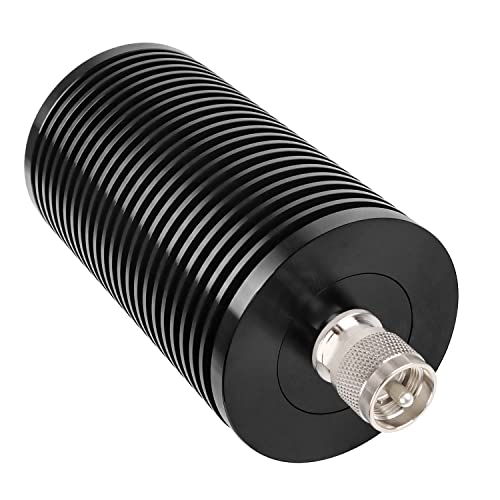
XRDS-RF
XRDS-RF 100 W dummy load, 50 ohm
The reference that proves the meter and radio are honest before you blame the antenna.
Check priceUnder $50
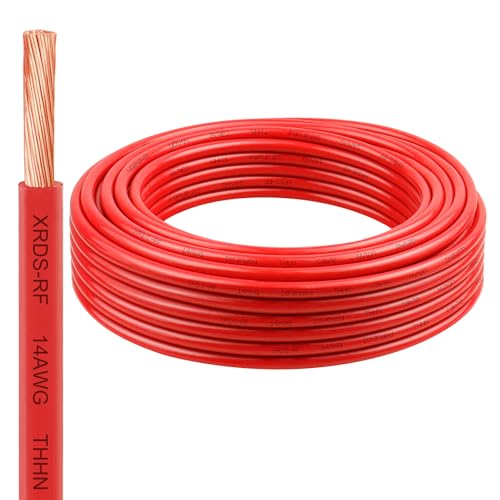
XRDS-RF
XRDS-RF 14 AWG stranded copper wire, 25 ft
Spare wire, because the recovery from cutting too far is a new leg rather than a repair.
Check priceUnder $25
Common questions
Questions people ask about this
How much wire do I cut to move resonance up 100 kHz?
Roughly one percent of the antenna length for every one percent of frequency change. On 40 metres, 100 kHz is about 1.4 percent of 7.1 MHz, so a 66 ft wire needs about 11 inches removed. On a dipole that is 5.5 inches from each leg. On 10 metres the same 100 kHz is only 0.35 percent, so the cut is under an inch, which is why an analyser matters more on the higher bands.
Do I have to raise the antenna to full height to measure it?
Yes, and this is the step people skip. Height above ground changes the feedpoint impedance and the resonant frequency of a horizontal antenna substantially. An antenna trimmed at 8 ft can be 200 kHz off when raised to 35 ft. Measure at final height and final shape, including the angle of an inverted V, or expect to do the whole job again.
What if I cut too much?
Solder or crimp an extension onto the end, or use an alligator clip and a short length while you decide. Electrically a joined wire is fine as long as the joint is solid and weatherproofed. This is exactly why the procedure starts three percent long and takes half the calculated cut on the first pass. Folding the wire back instead of cutting also avoids the problem entirely.
Why does the SWR never go below 2 to 1 even at resonance?
Resonance and impedance match are different things. At resonance the reactance is gone, but the resistive part may still not be 50 ohms. On a dipole this usually means height, since a low dipole has a lower feedpoint resistance. On a vertical it almost always means an insufficient radial field, where the missing radials are effectively adding loss resistance that the meter cannot distinguish from a match.
Can I trim an antenna in the rain?
You can measure in the rain but do not trim to a wet reading. Water on and around the antenna shifts resonance downward, so an antenna trimmed to be perfect while wet will be high in frequency once it dries. Measure in typical dry conditions, and treat a large wet versus dry difference as a sign that water is getting into a connector or a trap.
Keep going
Related on this site
Disclaimer Researched guidance for planning purposes, not professional engineering, electrical or legal advice. Antenna work, RF exposure, mast and tower work, grounding and battery handling all carry real risk that depends on your specific site and installation. Verify anything safety-critical against current FCC rules, the National Electrical Code and the manufacturer's own documentation, and hire a professional where the job calls for one. We research equipment from published specifications, regulatory documents and verified owner reviews rather than claiming hands-on testing we have not done.