Baofeng versus Yaesu: what the extra money buys
The difference is the receiver, not the transmitter. Both put out five watts.
The short answer
A Baofeng and a Yaesu handheld both transmit about 5 W and both work through repeaters. What the Yaesu buys is receiver selectivity that stays usable near strong commercial transmitters, a die-cast chassis, better audio and a warranty. In a quiet rural area the cheap radio is genuinely fine. In a city with paging and broadcast transmitters nearby it is not.
- Baofeng UV-5R
- Under $25
- Yaesu FT-60R
- Under $250
- Output, both
- About 5 W
- Key difference
- Receiver front end
- Chassis
- Plastic versus die-cast
- First upgrade for either
- The antenna
This comparison generates more heat than any other purchase decision in the hobby, and most of the argument happens because the two sides are describing different environments. Both claims are true. A Baofeng is a remarkable amount of radio for the money and it works. A Yaesu is meaningfully better in ways that matter enormously in some places and not at all in others.
The honest answer is that the transmitter is not the difference. Both put roughly five watts into the antenna and a repeater cannot tell them apart. The difference is entirely on receive, and how much it matters depends on what else is transmitting near you.
What is actually different
Head to head
Where the money goes
| Factor | Baofeng UV-5R class | Yaesu FT-60R class |
|---|---|---|
| Transmit power | About 4 to 5 W | About 5 W |
| Receiver selectivity | Poor, wide open front end | Good, properly filtered |
| Intermodulation rejection | Weak | Strong |
| Chassis | Plastic | Die-cast metal |
| Audio quality | Adequate, thin | Noticeably better |
| Battery system | Cheap, widely available | Supported, better quality |
| Programming | CHIRP, third party | CHIRP plus factory software |
| Warranty and support | Effectively none | Real, with parts |
| Spectral purity on transmit | Marginal on some units | Comfortably compliant |
The intermodulation row is the one that decides real world satisfaction. A wide open receiver in a city hears the mixing products of every strong transmitter around it, which sounds like the radio is broken.
The receiver problem explained
A receiver front end has to accept the signal you want and reject everything else. Cheap radios economise here, using little filtering ahead of the first mixer. When a strong nearby transmitter arrives, the mixer is driven into non-linearity and produces sum and difference products that land on frequencies where nothing is actually transmitting.
- In a rural area with few strong transmitters, this never happens and the cheap radio performs indistinguishably from an expensive one.
- Near a paging transmitter, a broadcast site or a commercial repeater, it happens constantly and the radio appears to receive noise on empty channels.
- The symptom people report is that a radio which works fine at home is useless downtown or at a hilltop site.
- Nothing can be done externally. A bandpass filter helps and defeats the point of a pocket radio.
- This is also why the same cheap radio gets glowing reviews and scathing ones from equally honest operators.
The upgrade that beats both
A gain whip in place of the stock rubber duck improves either radio more than the difference between them. A stock antenna is short, heavily loaded and has negative gain. A Nagoya NA-771C 15-inch whip or a Diamond SRJ77CA roughly doubles usable range for a fraction of the price difference between the two radios.
An outdoor antenna is larger again. A Diamond X50A dual-band base antenna on a gable end, fed with decent coax, turns any handheld into a station that works repeaters neither radio can reach from inside the house. The Technician starter station build prices that whole arrangement.
Three sensible choices
Three tiers
Where to land
All three transmit about five watts. They differ in what they can hear and how long they last.
Studying for the exam, or wanting a spare
Baofeng
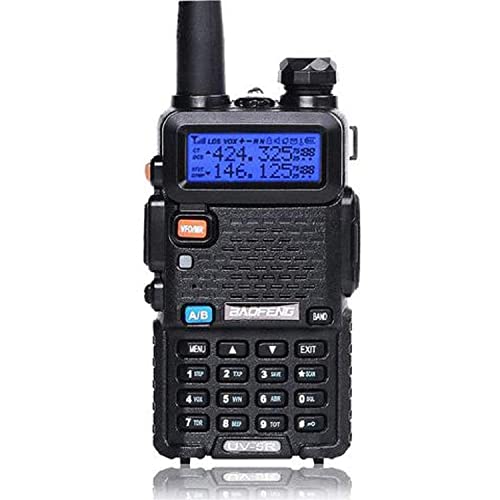
Baofeng UV-5R
The cheapest working dual-band handheld. Program it with CHIRP, put a real antenna on it, and it does everything a handheld can do in an area without strong interference.
- Price class Lowest
- Receiver Weak
Tradeoff
A wide open receiver that struggles near commercial transmitters, and effectively no support.
Wanting app programming and a better build without the flagship price

BTECH
BTECH UV-PRO
A considerably better built radio than the classic cheap handhelds, with phone-based programming that sidesteps the cable question and a receiver that behaves better in a busy environment.
- Programming App
- Build Improved
Tradeoff
Still not a match for a properly filtered front end in the worst locations.
Urban operating, emergency use, or simply wanting it to work

Yaesu
Yaesu FT-60R
A receiver that stays usable where cheap radios fail, a die-cast chassis that survives being dropped, and a support and accessory ecosystem that still exists. The radio people still recommend years later.
- Chassis Die-cast
- Receiver Filtered
Tradeoff
No digital modes, a dated interface, and roughly twelve times the price of the cheapest option.
Accessories either way
What to buy alongside
The antenna first, then the battery, then the microphone. In that order for either radio.

Nagoya
Nagoya NA-771C 15-inch whip
The gain whip. Improves either radio more than the price difference between them.
Check priceUnder $25
Diamond Antenna
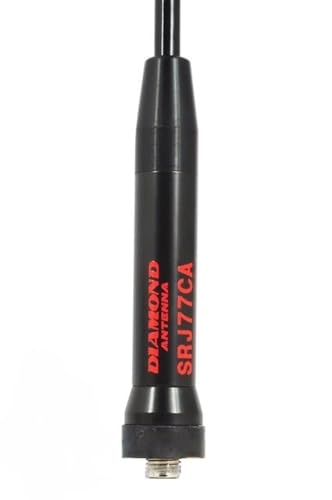
Diamond SRJ77CA
A shorter gain whip that is easier to carry on a belt, with most of the benefit.
Check priceUnder $50

Baofeng
Baofeng UV-5R 3800 mAh USB-C battery, 2-pack
An extended pack that turns a weekend radio into an all-day one.
Check priceUnder $25

Baofeng
Baofeng BF-850 speaker mic
A speaker microphone for better audio and to keep the antenna away from your head.
Check priceUnder $25
BTECH
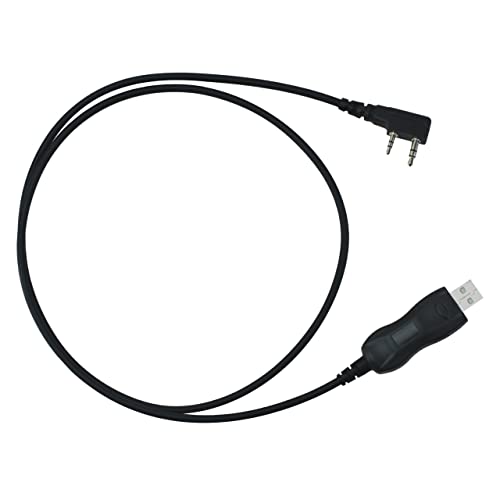
BTECH PC03 FTDI programming cable
A programming cable with a chipset that current drivers still talk to.
Check priceUnder $25
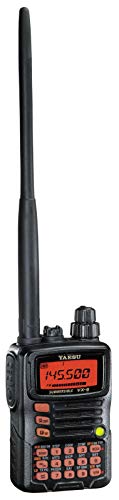
Yaesu
Yaesu VX-6R
The step up from the FT-60R, submersible and tri-band, for anyone who takes a radio outdoors seriously.
Check priceUnder $500
Icom
Icom IC-V86
A single band alternative with unusually high output and a rugged case.
Sold by Icom, through amateur radio dealers, not Amazon. The link searches the category.

Heletul
Heletul over-ear boom headset
A headset for hands-free operation at an event or in a noisy environment.
Check priceUnder $25
Common questions
Questions people ask about this
Is a Baofeng good enough for a first radio?
Yes, in most places. It transmits about the same power as a radio twelve times the price, works through repeaters, and costs less than the exam. Its weakness is receiver selectivity, so in a city with strong paging or broadcast transmitters nearby it can appear to receive noise on empty channels. In a quieter area it performs indistinguishably from an expensive handheld.
What does the extra money on a Yaesu actually buy?
A properly filtered receiver front end that rejects strong nearby signals instead of mixing them into audible interference, a die-cast metal chassis, better transmit and receive audio, a supported battery and accessory range, and a real warranty. It does not buy more transmit power. Both radios put roughly five watts into the antenna.
Should I upgrade my radio or my antenna first?
The antenna, without question. A gain whip in place of the stock rubber duck roughly doubles usable range and costs a fraction of the price difference between a cheap and an expensive handheld. An outdoor antenna on the roof is larger again. Only after both of those does a better receiver become the limiting factor.
Do cheap handhelds meet the transmit standards?
Compliance varies by model and by production batch, and some cheap radios have been measured with marginal harmonic suppression. It is a real concern and a reason to buy from a reputable seller and to avoid models that have been withdrawn. In practice a stock radio operated within the amateur bands at low power is unlikely to cause a problem anyone notices.
Can a cheap handheld do digital modes?
Not DMR, Fusion or D-STAR on the basic models, which are analog FM only. There are inexpensive DMR handhelds, and the cost difference from analog is smaller than it used to be. What no cheap radio does well is the setup, since DMR needs a code plug, which is why community-shared configuration files matter more than the radio price.
Keep going
Related on this site
Disclaimer Researched guidance for planning purposes, not professional engineering, electrical or legal advice. Antenna work, RF exposure, mast and tower work, grounding and battery handling all carry real risk that depends on your specific site and installation. Verify anything safety-critical against current FCC rules, the National Electrical Code and the manufacturer's own documentation, and hire a professional where the job calls for one. We research equipment from published specifications, regulatory documents and verified owner reviews rather than claiming hands-on testing we have not done.