Analog FM versus DMR versus System Fusion versus D-STAR
Analog works everywhere and sounds like radio. Digital sounds cleaner, reaches further, and asks more of you.
The short answer
Analog FM is universal, needs no configuration beyond a frequency and a tone, and degrades gracefully at the edge of coverage. DMR has the widest worldwide network and the steepest setup, since it needs a code plug with talkgroups. System Fusion is the easiest digital mode to start with. D-STAR has the longest history and the smallest current growth.
- Analog radios
- From $25
- DMR radios
- From $80
- Fusion radios
- From $230
- Setup difficulty
- DMR highest
- Edge behaviour
- Analog degrades, digital drops
- What to learn first
- Analog
Digital voice arrived in amateur radio as three incompatible systems and has stayed that way. Each has a vocal community, each has a network that reaches across the world, and none of them talk to each other without a bridge. That leaves a genuine choice for anyone buying a VHF or UHF radio.
The good news is that the choice is less consequential than it appears, because every digital radio also does analog FM, and analog is where the local activity is in most areas. What the digital mode really buys you is the network behind it.
The four systems
- Analog FM
- What every amateur radio does. No configuration beyond frequency, offset and tone. Audio quality is limited by the signal, which means it degrades smoothly from perfect to scratchy to unreadable. That graceful degradation is a genuine advantage at the edge of coverage, where digital simply stops.
- DMR
- A commercial two-slot standard adopted by amateurs, with the largest worldwide network. Two conversations share one repeater channel using time slots, which doubles capacity. Setup requires a code plug listing talkgroups, colour codes and time slots, plus a personal DMR ID, and that is where most people give up. Once configured it is excellent.
- System Fusion, or C4FM
- Yaesu system, designed for amateurs rather than adapted from commercial use. Its automatic mode switching means a Fusion repeater accepts both analog and digital users without configuration, which makes it by far the gentlest introduction. A Yaesu FT-70DR gets you on a Fusion repeater with about as much setup as an analog radio.
- D-STAR
- The oldest amateur digital voice system, backed originally by Icom, with a mature reflector network and a callsign-based routing scheme that is elegant and unlike anything else. Its growth has slowed relative to DMR, and radio choice is narrower.
Head to head
Comparison
What each system asks and gives
| Factor | Analog FM | DMR | Fusion | D-STAR |
|---|---|---|---|---|
| Radio cost, entry | $25 | $80 | $230 | $300 |
| Setup difficulty | Trivial | High | Low | Moderate |
| Worldwide network | Via bridges | Largest | Large | Mature |
| Channel efficiency | One per repeater | Two time slots | One | One |
| Edge of coverage | Degrades smoothly | Drops abruptly | Drops abruptly | Drops abruptly |
| Audio character | Natural, noisy | Clean, robotic | Clean, natural | Clean, thin |
| Data alongside voice | No | Yes, text and GPS | Yes, images and GPS | Yes, text and GPS |
| Local activity | Highest everywhere | High in cities | Varies by region | Regional pockets |
The last row is the one that should decide your purchase. A digital system with no local repeater is a hotspot in your house, which is a different hobby from talking to people nearby.
The code plug problem
DMR configuration is genuinely harder than any other amateur radio setup, and it is the main reason people buy a DMR radio and never use it in digital mode.
- You need a personal DMR ID, applied for once and issued free, which identifies your radio on the network.
- You need a code plug, which is a configuration file listing channels, each with a frequency, colour code, time slot and talkgroup.
- Talkgroups are the conversations. A worldwide talkgroup, a regional one, a state one and a local one all live on the same repeater and you select between them.
- Time slots split the repeater capacity in two. Using the wrong slot for a talkgroup means nobody hears you.
- The practical answer is to download a code plug somebody in your area has already built and edit it. Almost every active DMR region has one circulating.
- A AnyTone AT-D878UVII Plus or Retevis RT3S both have large communities producing exactly those files.
Fusion, by comparison, needs a frequency and nothing else on many repeaters, because the automatic mode select feature lets the machine detect whether you are analog or digital. That single design decision is why Fusion is the easiest place to start.
Hotspots
A personal hotspot is a small device that connects to your home internet and creates a tiny local digital repeater covering your house. It puts you on the worldwide network with no local repeater at all.
- It works, it is inexpensive, and it is how many people use digital voice in areas with no infrastructure.
- It is also, honestly, internet telephony with a radio link at your end. Whether that is amateur radio is a question people enjoy arguing about.
- It is genuinely useful for staying in touch with a distant community and for learning a system before committing to it.
- It does nothing at all when the internet is down, which matters if your interest is emergency communication.
What to buy
Radios by system
Every one of these also does analog FM, which is the mode you will use most.

AnyTone
AnyTone AT-D878UVII Plus
The DMR handheld with the largest community and the best support for finding a ready-made code plug.
Check priceUnder $250
Retevis
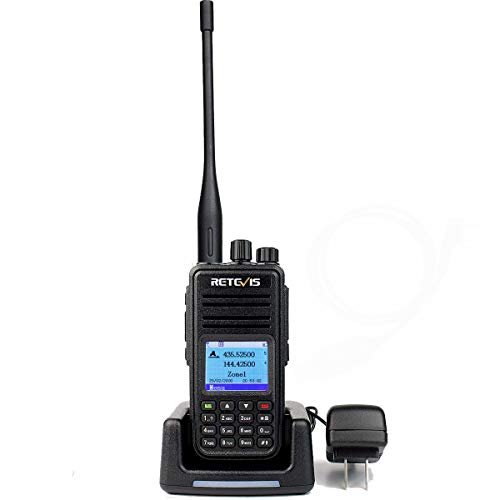
Retevis RT3S
A cheaper DMR route with an open firmware community, for people who enjoy configuring things.
Check priceUnder $100

Yaesu
Yaesu FT-70DR
The simplest way onto a System Fusion repeater. Analog and C4FM with almost no setup.
Check priceUnder $250

BTECH
BTECH UV-PRO
A modern analog handheld with app-based programming, for anyone who concludes analog is enough.
Check priceUnder $250

Yaesu
Yaesu FT-60R
The analog benchmark, with the receiver front end that makes it usable in a crowded RF environment.
Check priceUnder $250
Icom
Icom IC-V86
A single band analog handheld with unusually high output and a rugged case, for reliability over features.
Sold by Icom, through amateur radio dealers, not Amazon. The link searches the category.

Nagoya
Nagoya NA-771C 15-inch whip
A gain whip, which improves every radio on this page more than any feature does.
Check priceUnder $25
BTECH
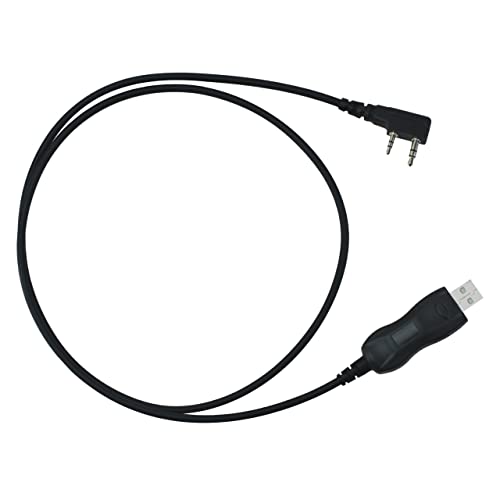
BTECH PC03 FTDI programming cable
A programming cable, needed for every one of these radios regardless of mode.
Check priceUnder $25
Common questions
Questions people ask about this
Which digital voice system should I choose?
Whichever one your local repeaters actually run. These systems are regional, and a worldwide network is no substitute for a machine you can reach from your car. Check the local repeater directory and listen for a week before buying. If your area has both, DMR has the larger network and Fusion has the gentler setup.
Why is DMR so hard to set up?
Because it was designed for commercial fleets where a technician programs every radio. Each channel needs a frequency, a colour code, a time slot and a talkgroup, and getting any of them wrong means nobody hears you. The practical solution is to download a code plug that somebody in your region has already built and edit it, which almost every active DMR area has circulating.
Does digital voice sound better than analog FM?
Cleaner, within its coverage area, because the vocoder either decodes correctly or it does not. What it loses is graceful degradation. An analog signal at the edge is scratchy and still readable; a digital signal at the same point breaks into fragments and then stops entirely. Analog also sounds more natural, since digital voice is a low bit rate vocoder and it shows on some voices.
Do I need a hotspot?
Only if you have no local digital repeater and want access to the worldwide network anyway. A hotspot creates a tiny personal repeater in your house connected over the internet. It works well and it is inexpensive. It also depends entirely on your internet connection, which matters if your interest in the hobby includes operating when infrastructure fails.
Can digital and analog users talk to each other?
Not directly on the same transmission. System Fusion repeaters with automatic mode select can accept both analog and digital users and pass audio between them, which is a genuine advantage. Otherwise a bridge or a cross-mode gateway is required, and most repeaters run one mode at a time. Every digital handheld also does analog FM, so you are never locked out.
Keep going
Related on this site
Disclaimer Researched guidance for planning purposes, not professional engineering, electrical or legal advice. Antenna work, RF exposure, mast and tower work, grounding and battery handling all carry real risk that depends on your specific site and installation. Verify anything safety-critical against current FCC rules, the National Electrical Code and the manufacturer's own documentation, and hire a professional where the job calls for one. We research equipment from published specifications, regulatory documents and verified owner reviews rather than claiming hands-on testing we have not done.