Best baluns and common-mode chokes
If the SWR changes when you touch the radio, you need a choke.
The short answer
A dipole fed with coax wants a 1:1 current balun at the feedpoint. An end-fed half wave wants a 49:1 transformer. A common-mode choke, which is a different job from matching, belongs on the feedline whenever RF is getting into the shack, and roughly 12 turns on an FT-240-31 core covers the HF bands.
- Dipole
- 1:1 current balun
- End-fed half wave
- 49:1 transformer
- Off-centre fed
- 4:1
- Choke on coax
- 12 turns, FT-240-31
- Symptom
- SWR moves when touched
- Also fixes
- RF in the shack
Baluns and chokes get conflated constantly, and they do two different jobs. A balun matches an unbalanced feedline to a balanced antenna, and may transform impedance while it does so. A common-mode choke stops RF flowing back along the outside of your coax shield. You can need one, the other, or both, and buying the wrong one fixes nothing.
The reason it matters: when common-mode current flows on the outside of the shield, the feedline radiates. It becomes part of the antenna, which distorts the pattern, brings RF into the house, and makes the SWR reading depend on where you are standing. That last symptom is the giveaway.
Everything here is researched from published specifications and manufacturer data rather than from measurements we have taken. Turn counts come from published core data; work yours with the balun and choke selector.
Which ratio for which antenna
Balun ratio by antenna type
| Antenna | Ratio | Why |
|---|---|---|
| Centre-fed dipole | 1:1 | Feedpoint is near 50 ohms; the job is balance, not transformation |
| Off-centre fed dipole | 4:1 | Feedpoint impedance rises as you move the feed off centre |
| End-fed half wave | 49:1 | Voltage-fed end is very high impedance, typically 2000 to 4000 ohms |
| Folded dipole | 4:1 | Folding raises the feedpoint impedance about fourfold |
| Random wire with a tuner | Unun, 9:1 | A compromise match, then let the tuner finish |
| Vertical with radials | 1:1 choke | Already unbalanced by design; you want isolation only |
A vertical does not need a balun in the matching sense, because it is not a balanced antenna. It often still needs a choke.
The symptoms of common-mode current
This is worth knowing by heart, because it is one of the few faults in amateur radio with a genuinely distinctive signature.
- SWR changes when you touch the radio, the coax or the desk. This is close to diagnostic.
- SWR reads differently depending on feedline length, which it should not for a resonant antenna.
- RF gets into audio equipment, computer speakers or the phone line when you transmit.
- You get RF burns from a microphone or a chassis at moderate power.
- Received noise is higher than the location deserves, because a radiating feedline is also a receiving one, and it runs right past every noise source in the house.
- Anything on this list means a choke, not a different antenna.
Three tiers
Three, covering the common cases
By what you are actually trying to fix.
Anyone feeding a centre-fed dipole with coax
Balun Designs
Balun Designs 1171 1:1 current balun
Does the matching and provides real common-mode isolation, weatherproofed for permanent outdoor installation. This is the standard answer and the one to buy if you are not sure.
- Ratio 1:1
- Use Outdoor feedpoint
Tradeoff
Costs more than a generic 1:1, and the difference is in the isolation and the power rating rather than in anything visible.
Sold by Balun Designs, roughly $110
Sold by Balun Designs, not Amazon. The button searches the category.
A single-support wire antenna, which is the most practical antenna on a small lot
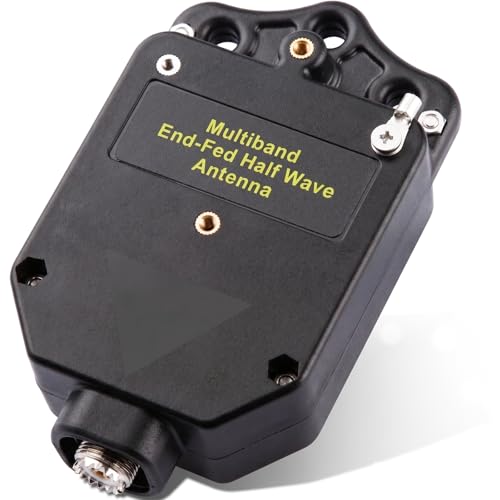
GOOZEEZOO
GOOZEEZOO 150 W end fed antenna transformer
The 49:1 transformer an EFHW needs to present something a radio can drive. An end-fed half wave needs only one high support and one anchor, which is why it suits so many properties.
- Ratio 49:1
- Use EFHW feedpoint
Tradeoff
An EFHW still wants a counterpoise and usually a choke at the radio end. The transformer alone is not the whole installation.
Anyone with RF in the shack or an SWR reading that moves
Palomar Engineers
Palomar Engineers feedline common-mode choke
A dedicated common-mode choke for the feedline, which is a separate job from matching. This is the part that stops the coax radiating and usually the part people are missing.
- Function Common-mode only
- Place On the feedline
Tradeoff
It does no impedance matching at all. If your antenna needs a transformer, you need both.
Sold by Palomar Engineers, roughly $60 depending on rating
Sold by Palomar Engineers, not Amazon. The button searches the category.
Winding your own, and where to put it
- An FT-240-31 core with roughly 12 turns of coax gives useful choking impedance across most of HF. Fewer turns favours the higher bands, more favours the lower.
- Mix 31 is the usual choice for HF common-mode chokes. Mix 43 suits VHF better.
- Position matters. At the antenna feedpoint is the most effective single location. A second choke where the coax enters the building helps with RFI specifically.
- A coil of coax without a core is not a proper choke. It has some effect and is frequency dependent and unpredictable.
- Turn counts by band are on the balun and choke selector.
Common questions
Questions people ask about this
What is the difference between a balun and a common-mode choke?
A balun matches an unbalanced feedline to a balanced antenna and may transform impedance while doing it. A choke blocks RF current from flowing on the outside of the coax shield. They are different jobs. A good current balun does both, which is why it is usually the better buy, but a 4:1 voltage balun may provide almost no common-mode isolation despite being called a balun.
Do I need a balun on a dipole?
Yes, if you are feeding it with coax, which is unbalanced while the dipole is balanced. Without one, current flows on the outside of the shield and the feedline becomes part of the antenna. Plenty of dipoles work adequately without one, which is why the advice gets ignored, but the pattern is distorted and the SWR reading becomes unreliable.
How many turns for a common-mode choke?
Roughly 12 turns of coax on an FT-240-31 core covers the HF bands usefully. Fewer turns shifts the effective range higher in frequency and more turns shifts it lower, so if you operate mostly on 80 and 40 metres, err toward more turns; if mostly on 15 and 10, fewer.
Why does my SWR change when I touch the radio?
Because common-mode current is flowing on the outside of your coax shield, so the feedline is part of the antenna system and your body is changing it. It is close to a definitive symptom, and the fix is a common-mode choke rather than anything to do with the antenna itself.
Can a balun fix a high SWR?
Only if the mismatch is caused by the impedance the balun is meant to transform, such as an end-fed half wave with no transformer. A balun cannot fix an antenna cut to the wrong length, and it cannot rescue an antenna that is not resonant where you are trying to use it. Check the length first.
Keep going
Related on this site
Disclaimer Researched guidance for planning purposes, not professional engineering, electrical or legal advice. Antenna work, RF exposure, mast and tower work, grounding and battery handling all carry real risk that depends on your specific site and installation. Verify anything safety-critical against current FCC rules, the National Electrical Code and the manufacturer's own documentation, and hire a professional where the job calls for one. We research equipment from published specifications, regulatory documents and verified owner reviews rather than claiming hands-on testing we have not done.