HF propagation basics: why a band opens and closes
The sun ionises the upper atmosphere, and the upper atmosphere bends your signal back down. Everything else is detail.
The short answer
HF signals reach beyond the horizon by refracting off ionised layers in the upper atmosphere. Higher bands work in daylight and during high solar activity, lower bands work at night, and the boundary is the maximum usable frequency, which rises through the morning, peaks in the afternoon and falls after dark.
- Refracting layer, day
- F2, 150 to 300 miles up
- Absorbing layer, day
- D, 30 to 60 miles up
- Solar cycle length
- About 11 years
- Best daytime band
- 20 m
- Best night band
- 40 m or 80 m
- Grey line
- Dawn and dusk terminator
A radio signal on 20 metres leaves your antenna, travels upward, and comes back down eight hundred miles away. Nothing about that is obvious, and understanding why is the difference between calling into a dead band and knowing which band is alive.
You do not need the physics in detail. What you need is a mental model with four moving parts: the sun ionises layers of the upper atmosphere, ionisation bends higher frequencies less than lower ones, a lower layer absorbs energy during daylight, and all of it changes through the day and through an eleven year cycle.
This page builds that model and then converts it into which band to try at what hour.
The layers
- The D layer, 30 to 60 miles up
- Forms in daylight and disappears within an hour or two after sunset. It does not refract signals, it absorbs them, and it absorbs low frequencies far more strongly than high ones. This single fact explains why 80 metres is useless at noon and excellent at midnight.
- The E layer, about 60 miles up
- Refracts signals over shorter distances. Its interesting behaviour is sporadic E, patches of intense ionisation that appear mostly in the warmer months and produce spectacular short-lived openings on 10 and 6 metres over several hundred to a thousand miles.
- The F layer, 150 to 300 miles up
- The workhorse. It splits into F1 and F2 during the day and merges at night. F2 is what carries long distance HF, and its height means a single hop can cover 2,000 miles or more.
- Multiple hops
- A signal refracted down can reflect off the ground or sea and go up again. Worldwide contacts are usually several hops, and each ground reflection costs energy, which is why sea paths outperform land paths noticeably.
Maximum usable frequency
Ionisation bends a signal by an amount that depends on frequency. Below a certain frequency the layer bends the signal enough to return it to earth. Above that frequency it passes straight through into space. That threshold, for a given path and moment, is the maximum usable frequency.
- MUF rises through the morning as the sun ionises the F layer, peaks in the early afternoon, and falls after sunset.
- MUF is higher toward the equator and higher during solar maximum.
- MUF depends on the path, not just on your location, because the signal refracts at the midpoint. A path to the east may be open while a path to the west is not.
- Operating just below the MUF gives the best results, because absorption is lower at higher frequencies. This is why the highest open band is usually the best band.
- The lowest usable frequency is set by D layer absorption, which is why daytime operation on 80 metres is limited to a few hundred miles.
Which band, when
Band behaviour
What each HF band does through the day and the solar cycle
| Band | Day | Night | Solar dependence |
|---|---|---|---|
| 160 m | Under 100 miles | Regional to worldwide in winter | Low, better at solar minimum |
| 80 m | Under 300 miles | Regional, worldwide in winter | Low |
| 40 m | 300 to 800 miles | 500 to 2,500 miles, reliable | Low, always usable |
| 30 m | Regional to long | Long, stable | Moderate |
| 20 m | Worldwide, the main band | Often open until late | Moderate, usable in any year |
| 17 m | Worldwide when open | Closes soon after dark | Moderate to high |
| 15 m | Worldwide in good years | Closes at dark | High |
| 12 m | Worldwide near solar max | Closed | Very high |
| 10 m | Spectacular near solar max, sporadic E in warm months | Closed | Very high |
| 6 m | Sporadic E and rare F2 openings | Closed | Very high, plus seasonal |
The single most useful habit is to start at the highest band that shows activity and work down. The highest open band suffers the least absorption and produces the strongest signals for the least power.
The solar cycle
Solar activity rises and falls over roughly eleven years, and it changes what the higher bands can do more than anything else. At solar maximum, 10 and 15 metres are open worldwide most days and a 100 W station with a wire works everything. At solar minimum those bands are largely closed and the action moves to 40, 30 and 20.
- Solar flux index is the practical daily number. Above about 150 the high bands are lively, below about 80 they mostly are not.
- Sunspot number tracks the same thing over longer periods and is what the eleven year cycle is drawn in.
- The A and K indices measure geomagnetic disturbance, and high values are bad news. A K index of 5 or more means an active geomagnetic storm, degraded paths at high latitudes and often an aurora.
- Solar flares cause sudden ionospheric disturbances that black out HF on the daylight side of the earth for minutes to hours. A band that dies abruptly and completely, everywhere, is usually this.
- Nothing about the cycle changes what you should build. Wire antennas and 100 W work in every year. What changes is which band you find the contacts on.
Grey line and other useful effects
- Grey line propagation
- Along the terminator between day and night, the D layer has decayed while the F layer is still ionised. For a window of twenty to forty minutes at your dawn and dusk, low band signals travel remarkably well along that line. It is the classic way to work distant stations on 80 and 40.
- Long path
- A signal can arrive by the long way round the earth. If a station is peaking from an unexpected direction, that is often what is happening, and it is common on 20 metres at dawn and dusk.
- Sporadic E
- Intense patches of E layer ionisation, mostly in the warmer months, producing sudden strong openings on 10 and 6 metres over 500 to 1,500 miles. They last minutes to hours and are the reason 6 metres is called the magic band.
- Backscatter
- Signals scattered off the ground or off aurora, arriving weak, distorted and from the wrong direction. It fills in the skip zone that would otherwise be silent.
- The skip zone
- The ring between where ground wave stops and where the first hop lands, in which you hear nothing. It is why you can work someone a thousand miles away and not someone eighty miles away on the same band.
Using this in practice
- Look at the daily solar numbers before you sit down. It takes ten seconds and tells you whether to expect anything on the high bands.
- Start at the highest band with activity and work down until you find contacts.
- Listen before concluding a band is dead. An empty band and a closed band sound the same and are not.
- Use the digital modes as a propagation indicator. Automatic reporting networks show you which paths are open right now, and they are a far better guide than any prediction.
- Operate at dawn and dusk for the low bands. The grey line window is short and productive.
- Keep notes. After a year, your own log tells you more about your station and your location than any general table can.
Gear that helps you see propagation
Seeing the band
A scope and a wideband receiver turn tuning around into looking.

Icom
Icom IC-7300
A real-time spectrum scope shows activity across the whole band at a glance, which is the fastest way to tell an empty band from a closed one.
Check priceUnder $2,500
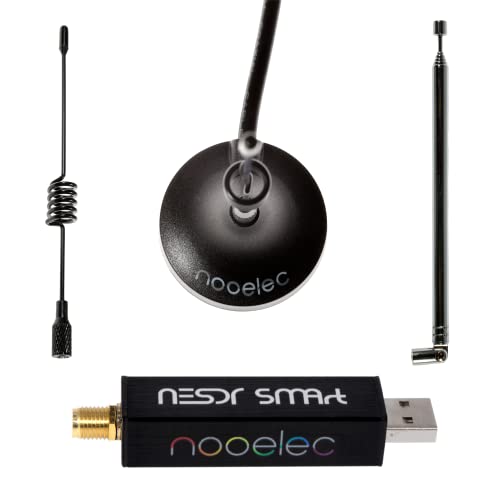
Nooelec
Nooelec NESDR Smart RTL-SDR bundle
A cheap wideband receiver that shows several megahertz at once, useful for watching a band come alive.
Check priceUnder $100

Yaesu
Yaesu FT-891
A capable 100 W radio with an excellent receiver, for stations that want the performance without the scope.
Check priceUnder $1,000

ARRL
ARRL Antenna Book, four-volume set
The reference on how height and antenna type set your takeoff angle, which decides which hop you land in.
Check priceUnder $100

ARRL
ARRL Handbook for Radio Communications
The general reference, with the propagation chapters that go a level deeper than this page.
Check priceUnder $50
Common questions
Questions people ask about this
Why is 20 metres open in the day and 40 metres at night?
The D layer forms in sunlight and absorbs low frequencies far more strongly than high ones, which shuts down 40 and 80 metres for long distance during the day. It disappears after dark, letting low band signals reach the F layer and refract. Meanwhile the F layer ionisation that supports 20 metres weakens after sunset, so 20 gradually closes while 40 opens.
What is the maximum usable frequency?
The highest frequency that the ionosphere will still bend back to earth for a given path at a given moment. Above it, signals pass through into space. MUF rises through the morning as the sun ionises the F layer, peaks in the early afternoon and falls after dark. Operating just below the MUF gives the strongest signals because absorption is lower at higher frequencies.
Does the solar cycle mean I should wait to get on HF?
No. Forty, thirty and twenty metres work in every year of the cycle, and 20 metres in particular is usable worldwide at solar minimum. What the cycle changes is whether 15, 12 and 10 metres are open, and those are the bands where a small station works the world easily. Build the station now and enjoy the high bands when they arrive.
What is grey line propagation?
A window of twenty to forty minutes around your sunrise and sunset when the absorbing D layer has decayed but the refracting F layer is still ionised along the terminator. Low band signals travel unusually well along that line, which makes dawn and dusk the productive times on 80 and 40 metres for long distance contacts. It is short, predictable and worth setting an alarm for.
Why can I work someone 1,000 miles away but not 80 miles away?
The skip zone. Ground wave covers a short distance and then dies, while the first ionospheric hop lands hundreds of miles out, leaving a ring in between where nothing arrives. The size of that ring depends on band and takeoff angle. For regional contacts inside the skip zone, use a lower band or a lower antenna, which raises the takeoff angle and shortens the hop.
Keep going
Related on this site
Disclaimer Researched guidance for planning purposes, not professional engineering, electrical or legal advice. Antenna work, RF exposure, mast and tower work, grounding and battery handling all carry real risk that depends on your specific site and installation. Verify anything safety-critical against current FCC rules, the National Electrical Code and the manufacturer's own documentation, and hire a professional where the job calls for one. We research equipment from published specifications, regulatory documents and verified owner reviews rather than claiming hands-on testing we have not done.