Masts, towers and rotators: what each one costs to do properly
Height is the best performance money can buy, and the most dangerous thing you will install.
The short answer
A telescoping push-up mast with guys handles a wire antenna or a small vertical to about 30 ft for under $200. A rotatable beam needs a real tower with an engineered concrete base, which is a permitted structure costing several thousand dollars installed. The rotator is sized by antenna wind surface area, not by weight.
- Push-up mast
- To 30 ft, $100 to $300
- Roof tripod
- To 10 ft above roof
- Guyed tower
- $3,000 to $10,000 installed
- Rotator sizing metric
- Wind surface area
- Guy anchor distance
- 60 to 80 percent of height
- Climbing
- Rated harness and training
Everything an antenna does is improved by height, and height is the one improvement you cannot fake. The support structure is therefore the most consequential purchase in a serious station, and the one where the difference between doing it properly and doing it cheaply is measured in whether anybody gets hurt.
There are four categories, and the jump between the second and the third is enormous in both cost and complexity. This page maps them, explains how to size a rotator, and is explicit about which parts are not a homeowner job.
The four support types
- Telescoping push-up mast
- Aluminium or fibreglass sections that slide inside each other, guyed at one or two levels. Handles wire antennas, small verticals and a light VHF beam to about 30 ft. An Easy Up 20 ft telescoping push-up mast plus a Threlaco 3-way galvanized guy wire kit, 50 ft is the complete solution for a few hundred dollars, and it comes down alone in ten minutes when weather threatens.
- Roof mount and tripod
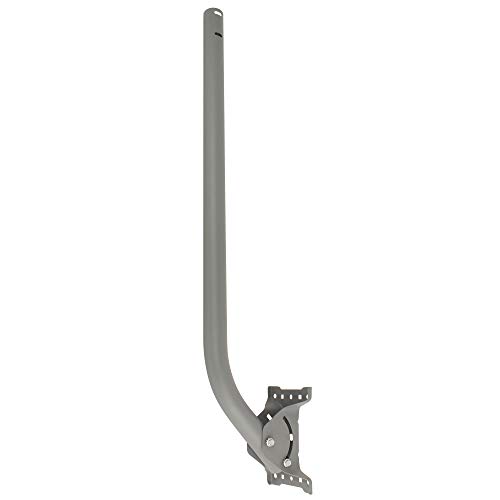
- A Skywalker heavy duty roof tripod with mast bolted through the roof structure, or a Skywalker J-pipe antenna mount, 38 in on a gable end reached from a ladder. Adds the roof height for free, which on a two storey house is a genuine 20 ft head start. Limited to about 10 ft of mast above the mount, and the roof penetration must be flashed and sealed by somebody who knows how.
- Guyed tower
- A sectional lattice tower with guy sets at intervals, standing on an engineered concrete base. Reaches 50 to 100 ft, carries a full size HF beam, and requires a permit, a designed foundation and a professional installation in almost every case. A ROHN 25G tower sectionsnot on amazon section is one part of a system, not a product you simply buy and stand up.
- Crank-up or tilt-over tower
- A tower that can be lowered from the ground for maintenance and for storms. Costs more per foot and is worth it, because the alternative is climbing. A tilt-over base is the single feature that most changes whether a tower gets maintained.
Guying, which is not optional
A mast without guys is a lever with the wind on one end. Guys are what turn a long thin thing into a structure, and the geometry matters more than the strength of the rope.
- Three guys at 120 degrees, minimum. Two guys is a hinge, and it will fold in the direction with no support.
- Anchor at a horizontal distance of 60 to 80 percent of the guyed height. A guy anchored close to the base pulls downward rather than sideways, which loads the mast in compression and does very little to resist wind.
- Guy at multiple levels for anything above about 20 ft. One guy set at the top of a 30 ft mast leaves the middle free to bow.
- Use non-conductive guy material near an HF antenna, or break the guys with insulators, so the guys do not become parasitic elements.
- Tension evenly and check it seasonally. Rope stretches, ground anchors move in wet soil, and a slack guy transfers its load to the others.
- Anchors must suit the soil. A screw anchor in sand is decorative.
Sizing a rotator
Rotators are rated in wind surface area, usually in square feet, not in antenna weight. This surprises people who assume a heavy antenna is the hard case. It is the wind load on the boom and elements that produces the torque a rotator has to hold, and that scales with area presented to the wind.
Rotator sizing
Rotator class by antenna wind surface area
| Antenna | Typical wind area | Rotator class | Researched price |
|---|---|---|---|
| VHF or UHF yagi, 5 elements | Under 1 sq ft | Light TV class | $80 to $200 |
| Small HF beam, 3 element 10 m | 2 to 4 sq ft | Medium | $400 to $700 |
| Triband HF beam, 3 element | 6 to 9 sq ft | Medium heavy | $700 to $1,200 |
| Large monoband or stacked array | 12 to 20 sq ft | Heavy, with a thrust bearing | $1,500 to $3,500 |
| Anything on a long mast above the bearing | Add 30 percent | Next class up | Plus mast and bearing |
Manufacturers publish wind area ratings for a specified wind speed. If you live somewhere with genuine wind, size up a class. A Yaesu G-450ADC antenna rotator covers the medium range and a Green Heron RT-21 rotator controllernot on amazon controller upgrade turns an older rotator into a precise one.
- A thrust bearing above the rotator takes the vertical and lateral load off the rotator itself, which is what makes a rotator last.
- Rotator cable is a consumable that runs the full height of the tower. Buy the 8-conductor rotator cable, 150 ft run once and buy it long, because splicing it later means lowering the antenna.
- A rotator inside the tower, below the top, is protected and serviceable. A rotator on top of a mast is exposed to everything.
- Protect the rotator control line at the entry panel along with the coax. It is a long conductor coming from the highest point on your property.
What a tower actually involves
The tower sections are the cheapest part. The full picture, in the order the money goes out.
- Permit and possibly a structural review. Most jurisdictions treat a tower as a structure. Some require a stamped engineering drawing for the foundation.
- Foundation. A designed concrete base with rebar, sized for your soil bearing capacity and wind zone. Typically several cubic yards of concrete, and it must cure before anything goes on it.
- Sections, guys and hardware. The visible part, and often under half the total.
- Installation labour. A crew, and possibly a crane for the top sections. This is where a tilt-over base pays for itself, because it converts future maintenance from a crew visit into an afternoon.
- Grounding. Each tower leg bonded, the base bonded, and everything tied to the single point entry panel and the electrical service ground. See station grounding and lightning protection.
- Ongoing inspection. Guy tension, hardware condition, and the rotator, on a schedule. A tower is a structure you maintain, not an appliance you install.
The support kit
Masts, mounts and rotation
Most stations never need a tower. Almost every station benefits from twenty more feet.

Easy Up
Easy Up 20 ft telescoping push-up mast
Telescoping aluminium that raises in stages and lowers alone. The right answer for a wire antenna support or a light vertical.
Check priceUnder $250

Threlaco
Threlaco 3-way galvanized guy wire kit, 50 ft
Anchors, tensioners and line. Without this, a mast is a lever waiting for wind.
Check priceUnder $50

Skywalker
Skywalker heavy duty roof tripod with mast
A roof or ground tripod giving the mast base a load-rated footing rather than a patch of lawn.
Check priceUnder $100
Skywalker
Skywalker J-pipe antenna mount, 38 in
A gable end mount reached from a ladder, which avoids walking on the roof entirely.
Check priceUnder $50

Yaesu
Yaesu G-450ADC antenna rotator
A medium duty rotator sized for a triband HF beam, with a control box that reads real bearing.
Check priceUnder $500
Green Heron Engineering
Green Heron RT-21 rotator controller
A precision controller that modernises an existing rotator and adds computer control for satellite and contest work.
Sold by Green Heron Engineering, not Amazon. The link searches the category.

JSC Wire
8-conductor rotator cable, 150 ft
Rotator control cable in a length that reaches the top of a real tower. Buy long once.
Check priceUnder $250
ROHN
ROHN 25G tower sections
A tower section for a properly engineered installation. The section is the easy part of the project.
Sold by ROHN, through tower dealers, not Amazon. The link searches the category.
The full HF base station build prices a complete mast, rotator and grounding system as part of the station rather than as an afterthought.
Common questions
Questions people ask about this
How high can I go with a push-up mast?
About 30 ft with proper guying and a light load such as a wire antenna support or a small vertical. Beyond that the sections flex enough that guying at multiple levels becomes essential and the whole thing becomes hard to raise safely. A push-up mast is not a beam support. If you want a rotatable HF beam, you have moved into tower territory and the requirements change completely.
How do I choose a rotator?
By the wind surface area of the antenna, which manufacturers publish, not by weight. Add the mast above the bearing to the total. Size up a class if you live somewhere windy, and fit a thrust bearing so the rotator carries torque rather than the entire vertical and lateral load. An undersized rotator does not fail immediately; it fails in the first storm after you stop thinking about it.
Do I need a permit for a tower?
In most jurisdictions yes, because a tower is a structure with a foundation. Requirements vary from a simple building permit to a stamped engineering drawing for the base. Separately, deed restrictions and homeowner association rules may restrict what you can install regardless of the permit, which is covered in the [HOA and antenna restrictions guide](/guides/hoa-and-antenna-restrictions/).
Is a roof mount as good as a mast in the garden?
Often better, because the roof gives you 20 ft of height for free on a two storey house. The tradeoffs are that a roof penetration must be properly flashed, the structure below has to take the load, and everything you do afterwards involves a ladder. For VHF and UHF verticals a gable end mount is close to ideal. For HF wire antennas a tree or a mast at the far end of the garden usually wins.
Can I install a tower myself?
The foundation and the erection are genuinely professional work. A designed concrete base, correctly guyed sections and safe lifting are outside what a homeowner should attempt, and climbing requires a rated full-body harness, fall arrest and training. Buying a tilt-over or crank-up design means the ongoing maintenance can be done from the ground, which is the part that actually matters over twenty years.
Keep going
Related on this site
- Antenna installation safety The survey and the raise, before anything goes up.
- Grounding and lightning protection A tower is the highest point on your property.
- Full HF base station build Mast, rotator and grounding priced in the build.
- Antenna height calculator What each extra ten feet actually buys you.
Disclaimer Researched guidance for planning purposes, not professional engineering, electrical or legal advice. Antenna work, RF exposure, mast and tower work, grounding and battery handling all carry real risk that depends on your specific site and installation. Verify anything safety-critical against current FCC rules, the National Electrical Code and the manufacturer's own documentation, and hire a professional where the job calls for one. We research equipment from published specifications, regulatory documents and verified owner reviews rather than claiming hands-on testing we have not done.