Technician versus General: which license to study for
Technician gets you on the air locally. General gets you on the air worldwide.
The short answer
Technician grants all amateur privileges above 30 MHz plus limited HF access, and the exam is 35 questions. General adds voice, data and CW privileges across most of the HF spectrum, which is what makes worldwide contacts practical. Sit Technician first, then take General at the same session, which most examiners allow at no extra charge.
- Technician questions
- 35
- General questions
- 35
- Pass mark
- 26 of 35
- Technician study time
- 10 to 15 hours
- General study time
- 15 to 25 hours
- Same day
- Usually free
The United States has three amateur license classes and only two of them are decisions. Technician is where everybody starts, Amateur Extra is a later ambition, and the real question for a newcomer is whether to stop at Technician or push straight through to General.
The honest answer is that it depends on what you want to do, and that the difference between the two is much larger than the difference in study effort. Technician is a local license and General is a global one.
What each class grants
Privileges
Band access by license class
| Band | Technician | General | Extra |
|---|---|---|---|
| 160, 80, 40 m | CW only, narrow segments | CW, voice, data on most | All, including the lowest segments |
| 30 m | None | CW and data, full band | CW and data, full band |
| 20 m | None | CW, voice, data on most | All, including the lowest segments |
| 17, 15, 12 m | 15 m CW only | CW, voice, data on most | All |
| 10 m | CW, voice and data, 28.0 to 28.5 | Full band | Full band |
| 6 m and above | Full privileges | Full privileges | Full privileges |
The practical summary: Technician is a full license everywhere above 30 MHz and a very limited one below it. General opens most of HF. Extra adds the bottom slices of the HF bands, which matter for contesting and for chasing rare stations. Full detail on the license privileges by class chart.
What that means in practice
- With a Technician license
- Local and regional repeaters, simplex, digital voice systems, satellites, packet, meteor scatter, moonbounce and 6 metre openings. Plus 10 metre voice when solar activity is high, which in a good year is genuinely productive worldwide. Everything in the Technician starter station build is fully usable.
- With a General license
- Everything above, plus the HF bands where worldwide contacts happen every day regardless of the solar cycle. Forty and twenty metres alone transform what the station does. This is the license that makes the first HF station build worth building.
- The gap that matters
- A Technician in a poor solar year has no reliable path to a worldwide contact on voice. A General has 20 metres every afternoon and 40 metres every evening. That is the whole argument.
The exams compared
Exam comparison
What each exam asks about
| Topic area | Technician emphasis | General emphasis |
|---|---|---|
| Rules and regulations | Heavy, licence basics | Moderate, more detail on HF |
| Operating practices | Repeaters, simplex, nets | HF procedure, nets, digital |
| Electrical principles | Light, mostly definitions | Moderate, some arithmetic |
| Components and circuits | Light | Moderate |
| Antennas and feedlines | Basic types and SWR | More detail, matching, loss |
| Propagation | Very light | Substantial, MUF, layers, cycle |
| Safety and RF exposure | Present on both | Present on both |
General is a step up, not a leap. It assumes the Technician material and adds propagation, antennas and a little more circuit theory. Most people find it takes about half again as long to study.
Who should stop at Technician
- If your interest is emergency communications with a local group, Technician covers the VHF and UHF systems those groups actually use.
- If you want to talk to family or a club on local repeaters, Technician is complete for that purpose.
- If you are drawn to satellites, moonbounce or VHF weak signal work, all of that lives above 30 MHz and needs no upgrade.
- If you live somewhere with no possible HF antenna and no plan to change that, the extra privileges are theoretical.
- In every other case, upgrade. The cost is a few evenings of study.
Studying for both
What to study with
The question pools are public and free. What you are buying is an explanation of why the answers are the answers.

ARRL
ARRL Ham Radio License Manual, Technician
The standard Technician manual, organised to follow the pool while still teaching the underlying idea.
Check priceUnder $50

ARRL
ARRL General Class License Manual
The General manual, which spends real time on propagation and antennas because that is where the exam moves.
Check priceUnder $50

ARRL
ARRL Extra Class License Manual
For later. Worth owning before you sit General if you intend to keep going, because the material overlaps.
Check priceUnder $50

Wiley
Ham Radio For Dummies
A lighter, plainer introduction to the hobby itself rather than to the exam, useful alongside a pool manual.
Check priceUnder $25
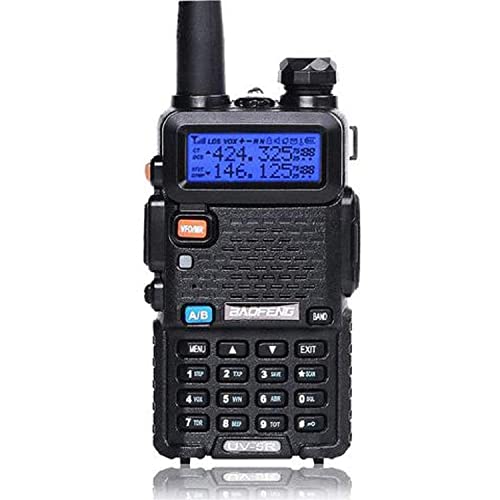
Baofeng
Baofeng UV-5R
Buy a radio before the exam and listen while you study. Receiving needs no licence and makes the material concrete.
Check priceUnder $25

ARRL
ARRL Operating Manual for Radio Amateurs
What to do after you pass, which is the question nobody studies for.
Check priceUnder $25
More on the exam itself in study materials, what the exam costs and what to expect on exam day.
Common questions
Questions people ask about this
Can I take the Technician and General exams on the same day?
Yes, at most volunteer examiner sessions, and usually at no additional fee. If you pass Technician you may immediately attempt General, and if you pass that you may attempt Extra. A meaningful number of candidates who only studied for Technician pass General on the same morning by trying. There is no penalty for failing an attempt.
Is the General exam much harder than Technician?
It is a step up rather than a leap. Both are 35 questions from a published pool with a pass mark of 26. General assumes the Technician material and adds substantially more propagation, antenna and feedline theory plus a little more circuit work. Most people find it takes about half again as much study, so fifteen to twenty five hours rather than ten to fifteen.
What can a Technician do on HF?
CW on portions of 80, 40 and 15 metres, and CW, voice and data on 28.0 to 28.5 MHz within the 10 metre band. When solar activity is high, 10 metre voice is genuinely productive worldwide and many Technicians make their first long-distance contacts there. When the cycle is low, that path largely disappears, which is the main argument for upgrading.
Do I need to learn Morse code?
No. The code requirement was removed from all United States amateur licence classes in 2007. You can hold an Amateur Extra licence without knowing a single character. Many operators learn CW anyway because it works when voice does not and because it is a genuinely enjoyable skill, but it is entirely optional and no exam tests it.
How long does a license last?
Ten years, and renewal is free and does not require another exam. There is a grace period after expiry during which you may renew but may not transmit. Keep the address on your licence current, because official correspondence goes there and an out-of-date address is a rule violation in its own right.
Keep going
Related on this site
Disclaimer Researched guidance for planning purposes, not professional engineering, electrical or legal advice. Antenna work, RF exposure, mast and tower work, grounding and battery handling all carry real risk that depends on your specific site and installation. Verify anything safety-critical against current FCC rules, the National Electrical Code and the manufacturer's own documentation, and hire a professional where the job calls for one. We research equipment from published specifications, regulatory documents and verified owner reviews rather than claiming hands-on testing we have not done.